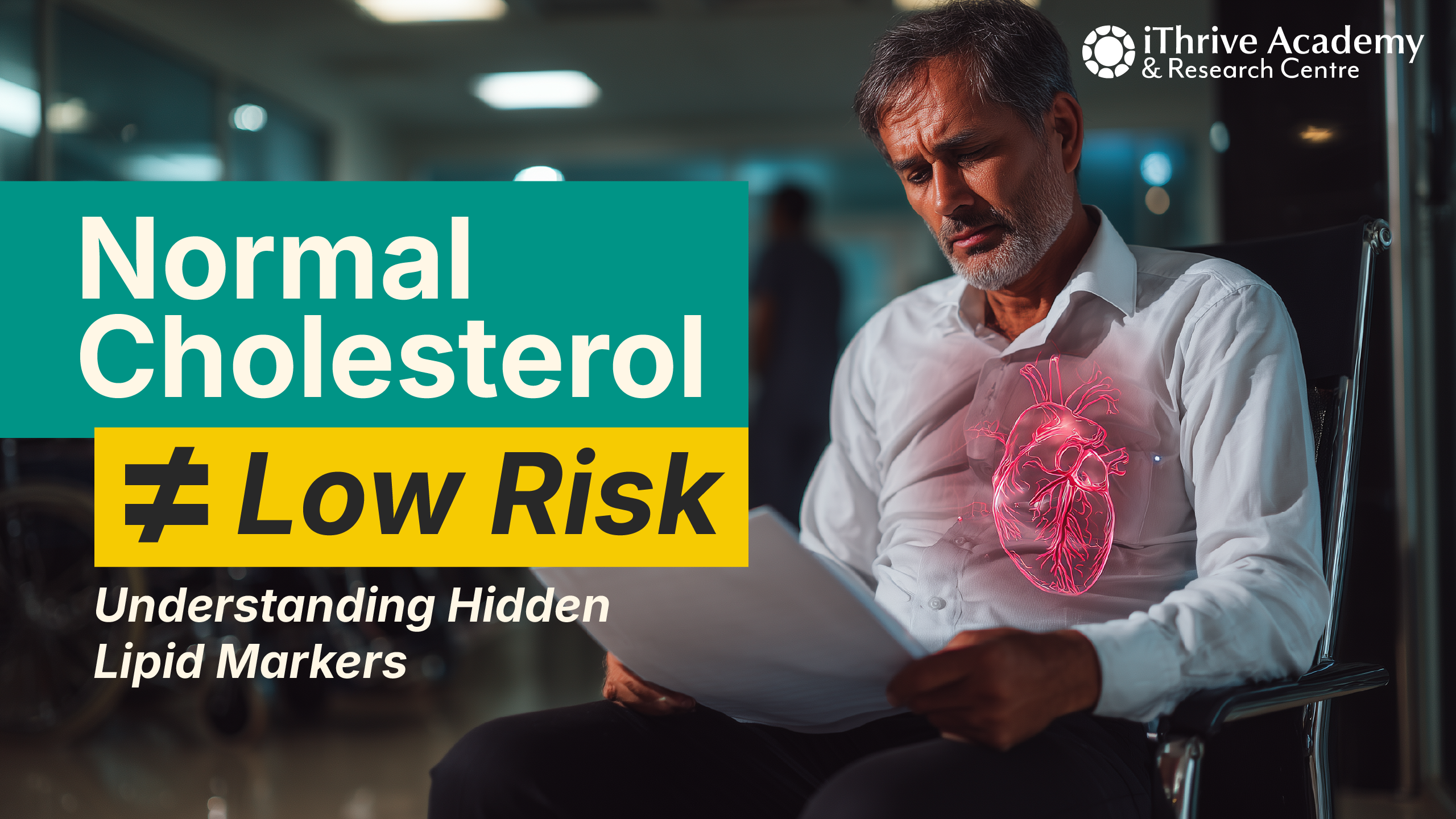
Most people grow up believing that “good cholesterol VS bad cholesterol” is the key to understanding heart disease. If your LDL is normal, you’re safe. If it’s slightly high, you worry. If your HDL is good, you breathe a sigh of relief. But what if this simple understanding is actually misleading thousands of people every year?
A large survey of patients hospitalized after heart attacks revealed something shocking. Nearly 75 percent had normal cholesterol levels.
Normal Numbers & Normal Reports Yet High Risk.
This mismatch tells us something powerful. Heart disease is not driven by cholesterol alone. Instead, the real danger lies in hidden markers that stay buried beneath a basic lipid profile. These markers reflect your metabolic health, inflammation, insulin sensitivity, and the true behaviour of your lipoproteins.
This is exactly why iThrive Academy, the first academy in India to teach Functional Nutrition, trains its students through evidence and root cause frameworks. Because the human body cannot be understood through surface level numbers. And cholesterol definitely cannot. Read more about why functional nutrition matters in our blog: Unlock Your Body’s Secrets: Why Learn Functional Nutrition.
Now let’s understand what really matters for cardiovascular health, and why an advanced understanding of lipids is now essential for every student of functional nutrition.
Why Normal Cholesterol Can Still Mean High Risk

Traditional lipid tests measure total cholesterol, LDL cholesterol, HDL cholesterol, and triglycerides. Helpful? YES but very incomplete. These numbers don’t tell you the size of your LDL particles, their density, their oxidised state, or how many of these particles are floating through your bloodstream at any moment.
Heart disease risk is not about how much cholesterol you have. It is about how your body transports cholesterol, how inflamed your arteries are, and whether your metabolism is working efficiently.
This deeper understanding forms the foundation of ICFN, iThrive’s flagship course in Functional Nutrition. Students are taught not to chase numbers, but to investigate what those numbers represent. As we explain in What Is Functional Nutrition, and Why Does It Matter in Today’s World, it's the root-cause that counts.
The Hidden Lipid Markers That Actually Predict Heart Disease
Apolipoprotein B: The Silent Warning Signal
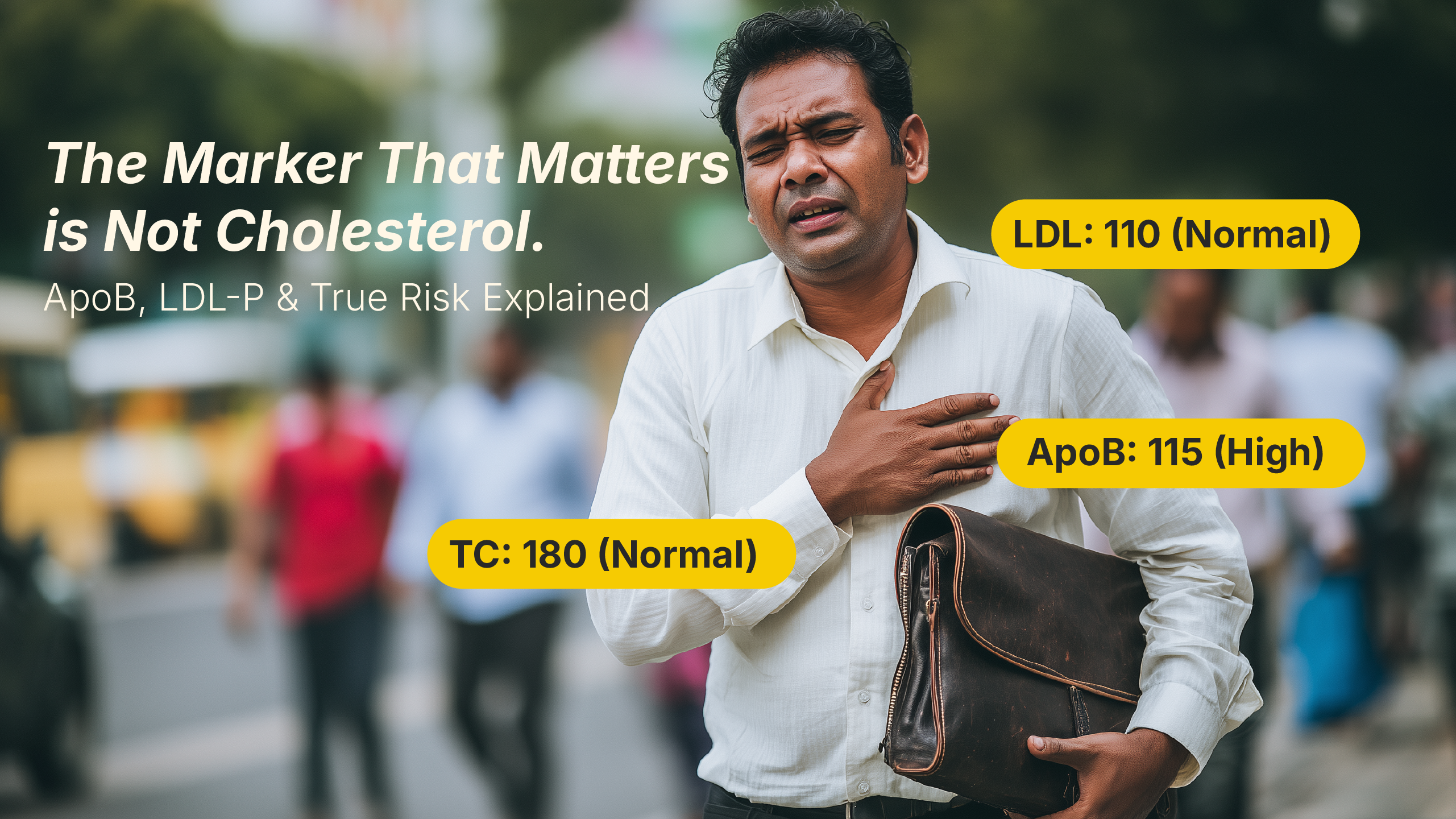
ApoB is often called the true marker of atherogenic particle burden. Every harmful cholesterol-carrying particle has one ApoB molecule attached to it. Measuring ApoB tells you exactly how many of these particles are present. More particles mean more chances of plaque formation.
Even with normal LDL levels, ApoB can be elevated.
And when ApoB is high, heart disease risk increases sharply.
This is why understanding ApoB is a major part of iThrive Academy’s Lipid Explained short course, designed to make lipid science simple, practical, and clinically relevant.
ApoB/ApoA1 Ratio: Delivery VS Cleanup
If ApoB represents the delivery trucks, then ApoA1 represents the cleanup crew in HDL particles. A higher ApoB to ApoA1 ratio means more delivery and less removal. Studies show this ratio predicts risk more accurately than LDL or HDL alone.
This ratio also reflects long term metabolic health and inflammation, which is taught in depth inside ICFN.
Small Dense LDL: The Most Dangerous Cholesterol
Not all LDL is equal. Small dense LDL particles are the troublemakers.
They slip into artery walls easily, oxidise quickly, and trigger inflammation.
Their production is heavily linked to insulin resistance, high triglycerides, and poor metabolic flexibility. And they are almost always missed in a basic lipid profile.
Understanding this connection between insulin resistance and lipid metabolism is a core part of the Lipid Explained short course offered at iThrive Academy, which teaches students the entire journey of fat digestion, transport, breakdown, and cellular utilisation. This aligns with insights from our blog The Functional Nutrition Secret to Fat Burning that Mainstream Diets Don’t Want You to Know.
Lipoprotein(a): The Genetic Wildcard
Lp(a) is one of the strongest independent predictors of early heart disease. It is genetically determined and unaffected by diet or exercise. If Lp(a) is high, risk increases even when LDL and total cholesterol appear normal.
Many people never test it, and many healthcare practitioners don’t ask for it.
This is where functional nutrition plays a life-changing role.
Metabolic and Inflammatory Markers: The Real Root Causes
Functional nutrition has shown repeatedly that metabolic syndrome, chronic inflammation, and insulin resistance are the real engines behind cardiovascular disease.
Triglycerides: HDL ratio
A high triglycerides to HDL ratio is one of the clearest red flags for metabolic dysfunction. Even when LDL is normal, this ratio can reveal poor lipid handling, insulin resistance, and increased inflammatory stress.
This ratio aligns with the broader understanding of metabolic syndrome, a major contributor to heart disease.
Ceramides: When Cells Signal Distress
Ceramides are inflammatory lipids that rise when the body is under chronic metabolic stress. Elevated ceramides predict heart attacks and strokes independent of standard cholesterol levels.
They offer a window into the deeper metabolic story, something that every student at iThrive learns to interpret.
Lp-PLA2: The Marker of Active Inflammation
Lp-PLA2 reflects active inflammation inside artery walls. When elevated, it suggests that plaque is unstable, inflamed, and prone to rupture. A heart attack doesn’t always happen because of a large blockage. Sometimes a small inflamed plaque can rupture and cause an emergency within minutes.
This is why inflammation and heart disease must always be considered together when reading any lipid profile. Functional nutrition even applies to performance as explored in Decoding Functional Sports Nutrition: How Electrolytes & HRV Define True Athletic Recovery.
Beyond Lipids: The Non-Lipid Markers You Cannot Ignore
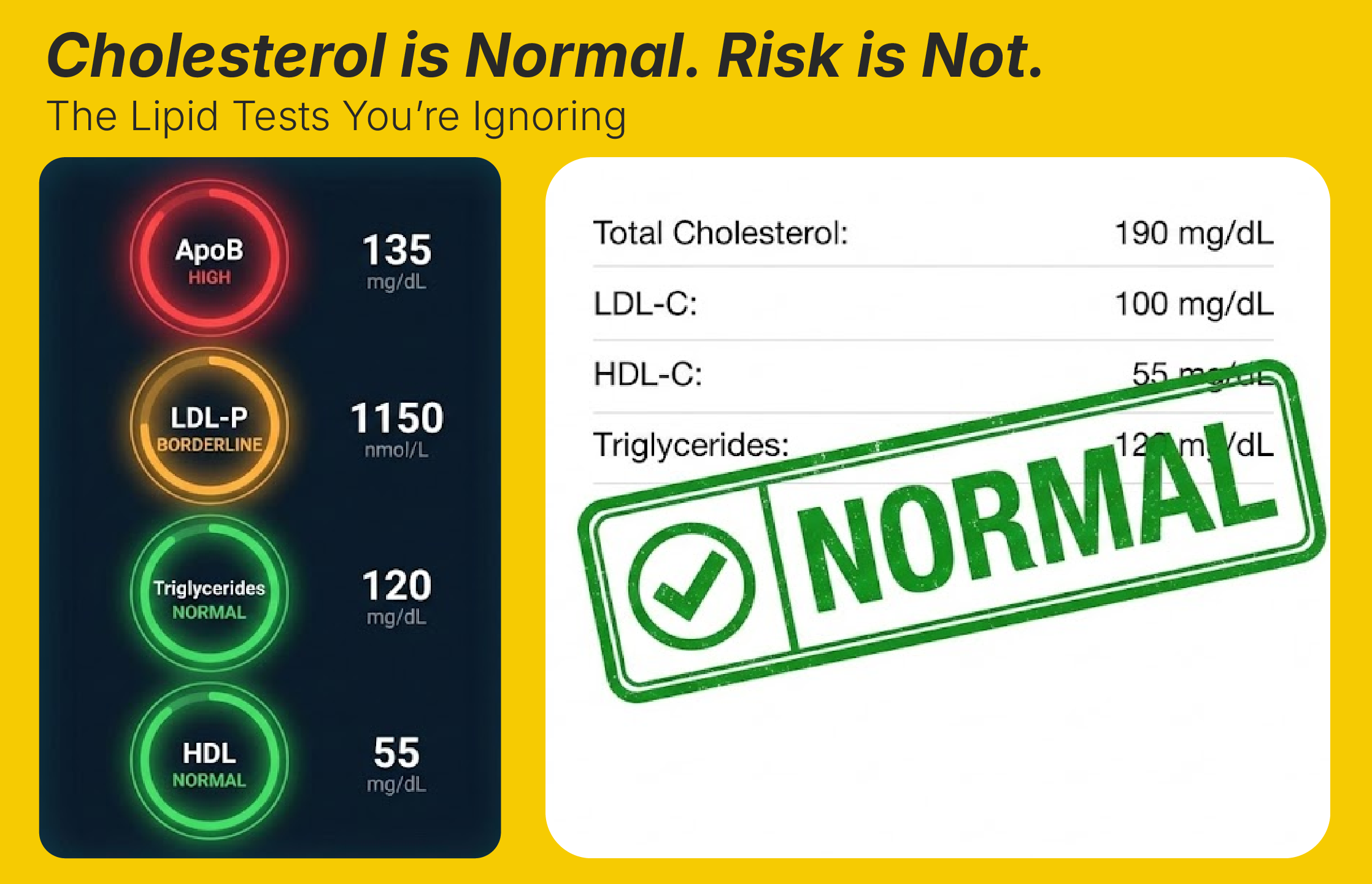
Cholesterol rarely acts alone. These additional markers offer context, depth, and true risk assessment.
Insulin and HOMA IR: The Foundation of Metabolic Health
Insulin resistance drives high triglycerides, small dense LDL, and endothelial dysfunction. Fasting insulin and HOMA IR can predict cardiovascular risk much earlier than glucose can.
Inflammation Markers: Hs-CRP
A normal cholesterol panel with high CRP or high homocysteine still signals high risk. CRP indicates host inflammation. Homocysteine suggests poor methylation and increased oxidative stress.
Both are essential in functional nutrition assessments.
Thyroid Function: The Overlooked Link
Low thyroid function slows cholesterol clearance, increases LDL, and worsens the ApoB/ApoA1 ratio. Many people with “high cholesterol” simply have subclinical hypothyroidism, which is one of the most common findings in functional nutrition practice.
How iThrive Academy Trains Students to Read Cholesterol Differently
Functional nutrition is not about lowering numbers. It is about understanding the body’s systems, their communication, and their dysfunctions.
At iThrive Academy, the first academy in India to teach Functional Nutrition, students learn to identify patterns, connect dots, and see the story behind every biomarker. Through ICFN, and short courses like Lipid Explained students learn:
- Why cholesterol levels rarely tell the whole story
- How metabolism and inflammation shape cardiovascular risk
- How to interpret functional ranges instead of generic lab ranges
- How to create personalised nutritional protocols based on root causes
- To understand Blood Lipid Interpretation
- Science of Fat Digestion and Absorption
- Whether all Fat is considered bad.
- Role of EFA and Essential Fatty Acids
This is the future of healthcare. And this is why graduates of iThrive Academy develop a level of depth that traditional nutrition education alone does not offer.
Want to go deeper? Read Exploring a Career in Functional Nutrition to know what it’s like to become an iCFN practitioner.
The Functional Nutrition Difference: Empower. Pioneer. Transform.
Every lab report is a story. Every symptom is a clue. Every marker is a piece of a bigger picture.
iThrive Academy trains you to read that story with precision, empathy, and scientific clarity. Whether you choose ICFN to build a complete foundation in functional nutrition, or add depth through powerful short courses like Lipid Explained, you are stepping into a space where healthcare moves beyond guesswork and truly transforms lives.
- This is where you empower clients with answers
- You pioneer a new standard of practice
- You transform health outcomes at the root
- Normal cholesterol may not mean low ris
But the right knowledge ensures you never miss the real markers again.
Final Thoughts
Heart disease is no longer a condition that can be predicted by simply checking LDL or HDL. Science has evolved, and so must the way we read health. The truth is, many individuals walk around with “normal” cholesterol levels yet carry a significant, silent risk. Hidden markers like ApoB, Lp(a), ceramides, triglyceride to HDL ratio, insulin resistance, and inflammatory markers offer a far more accurate picture of cardiovascular health than any basic lipid profile ever could.
This deeper lens is exactly what functional nutrition brings to the forefront. It replaces one-dimensional interpretations with systems thinking, where metabolism, inflammation, hormones, and lipid traffic are all considered together. When future practitioners understand lipid physiology beyond textbook numbers, they’re able to identify risks earlier, build better interventions, and help people truly transform health from within.
At iThrive Academy, students are trained to recognise these gaps and address them through root cause frameworks. Whether through the comprehensive ICFN program or targeted short courses like Lipid Explained, students gain clarity, confidence, and the skill set required to approach cardiovascular health in a way modern healthcare desperately needs.
Understanding lipids deeply is not just knowledge. It is empowerment for practitioners, clients, and the future of healthcare.






.jpg)