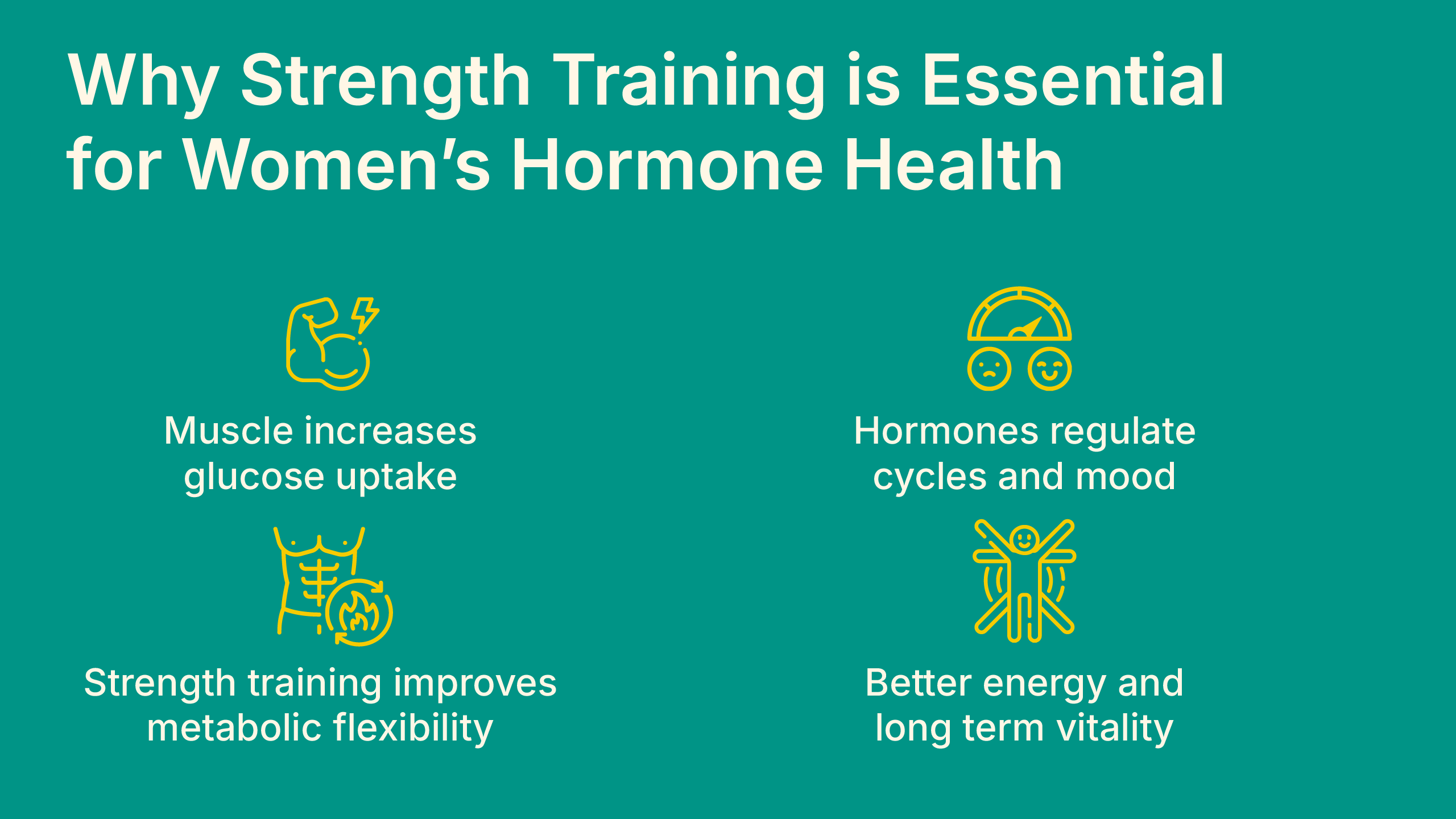
Walk into any gym and you will see rows of treadmills full of women working hard to stay fit. But move toward the weight section and suddenly the crowd thins. Many women still believe strength training is “too intense”, “too bulky”, or “not for them.” The truth is exactly the opposite. Strength training is one of the most powerful tools for women’s hormone balance, metabolic health, and long term vitality.
Muscle is medicine, especially for women who are navigating hormonal changes through their twenties, thirties, forties, and beyond. As the first academy in India to teach functional nutrition, iThrive Academy has seen this truth repeatedly through the lens of Functional Nutrition. In our iThrive Certified Functional Nutrition Program and Women’s Hormone Health short course, the students will also learn how strength training transforms hormonal signalling and supports whole body healing.
Strength training is not just about lifting weights. It is about improving the body’s most important regulatory systems. It restores metabolic flexibility, supports emotional resilience, and strengthens the endocrine pathways that influence everything from energy to mood to menstrual regularity.
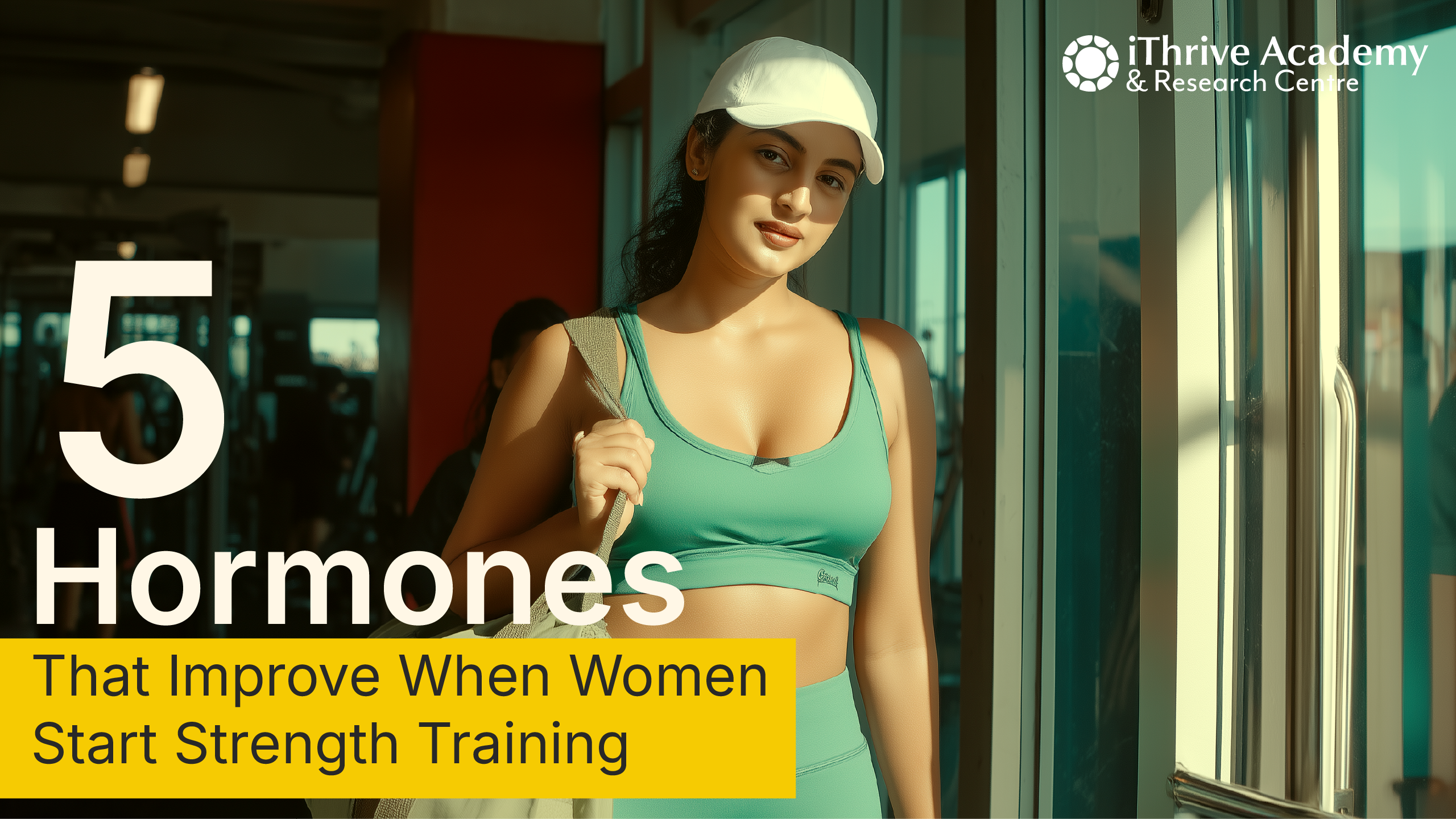
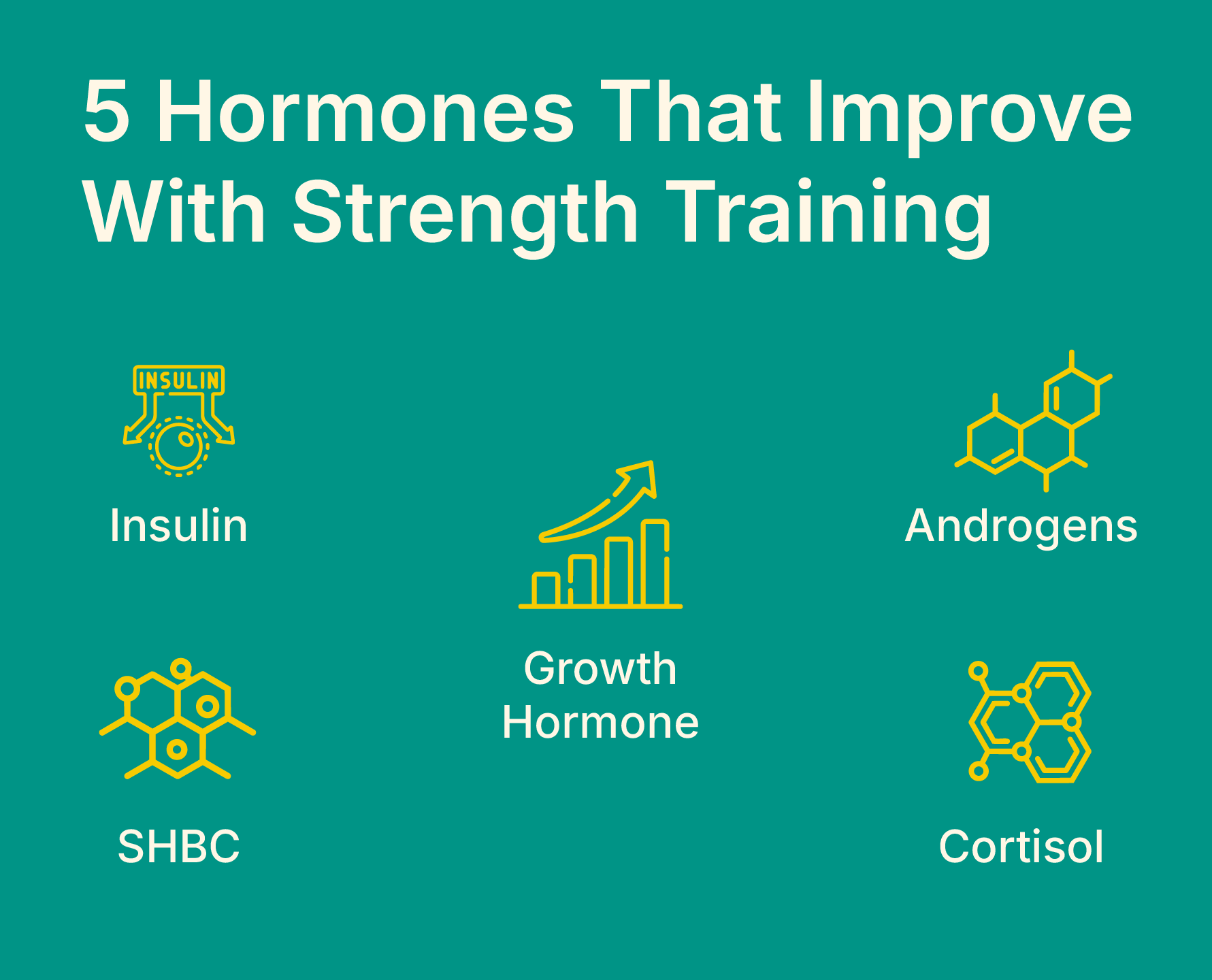
Below are the five hormones and hormonal markers that show significant improvements when women incorporate strength training into their routine. These are not fitness claims. These are well established, physiology backed shifts that empower women to take charge of their health.
1. Insulin Sensitivity: The Foundation of Women’s Metabolic Health
When it comes to hormones and exercise, insulin is one of the most important hormones that responds dramatically to strength training. Women today are more prone than ever to insulin resistance due to stress, nutrient deficiencies, poor sleep, and sedentary lifestyles. Strength training acts like a corrective force that restores insulin signalling from the inside out.
Muscle is the largest storage site for glucose. When women perform resistance exercises, the muscle cells become more sensitive to insulin. They open up more easily to absorb glucose, reducing the load on the bloodstream. This leads to more stable energy levels and fewer sugar cravings.
Research repeatedly shows that strength training improves the body’s response to insulin even without weight loss. This is particularly supportive for women dealing with PCOS, prediabetes, or metabolic dysfunction. Increasing muscle mass leads to better glucose uptake, and this begins to shift hormonal balance at a deeper level.
In the iThrive Certified Functional Nutrition Certification, learners study how insulin resistance affects thyroid hormones, ovarian function, adrenal signalling, and inflammatory pathways. This is why improving insulin sensitivity through strength training becomes one of the first lifestyle interventions recommended for women in the Women’s Hormone Health short course. When insulin stabilises, every other hormone system begins to regulate more effortlessly.
2. Androgens: Reducing Male Hormone Excess in Women
Many women experience symptoms like acne, hair thinning, irregular periods, and increased facial hair. These are often signs of elevated androgens, which are male hormones like testosterone and DHEA. Women produce these hormones naturally, but stress, poor metabolic health, and inflammatory conditions like PCOS cause them to rise beyond optimal levels.
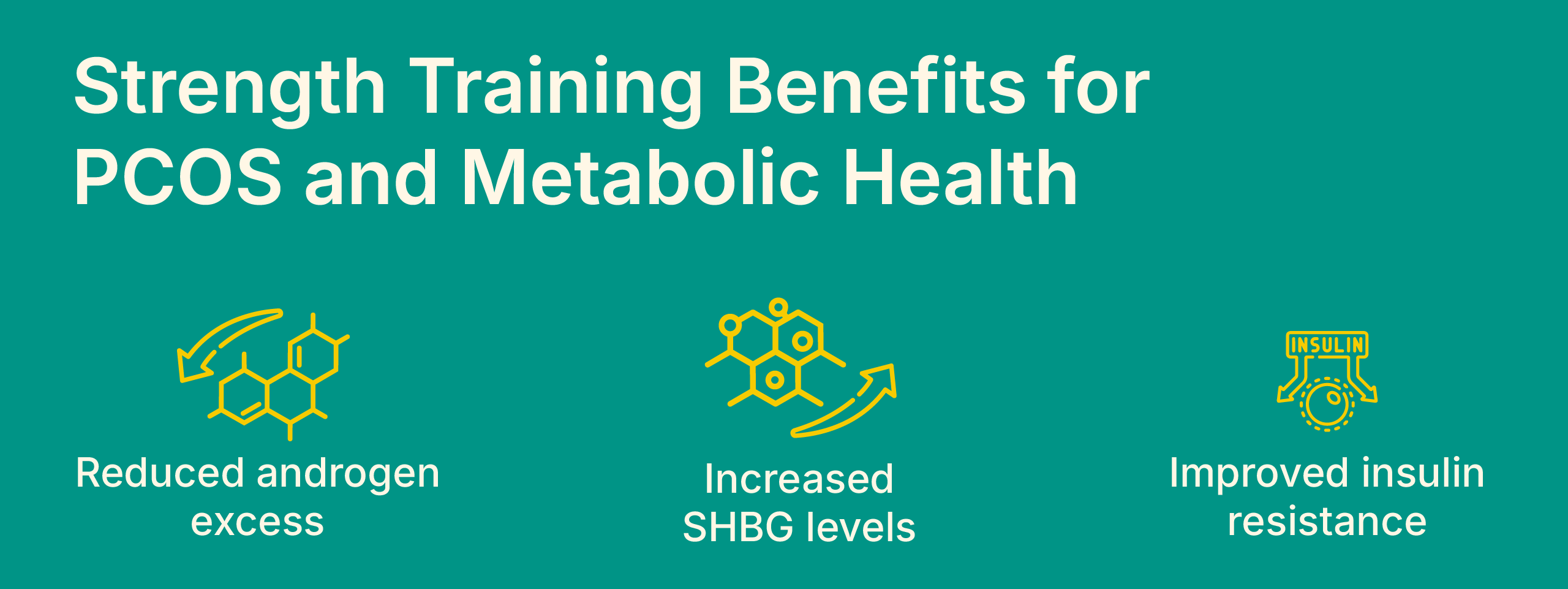
Strength training helps rebalance androgen levels by improving insulin sensitivity and reducing inflammation. Both insulin resistance and systemic inflammation are major triggers for excess androgen production. As insulin levels stabilize, the ovaries reduce their output of male hormones.
Studies show that aerobic exercise and resistance training together can lower androgen levels in women with PCOS. Exercise also improves ovarian function by supporting blood flow, reducing inflammatory triggers, and enhancing metabolic efficiency.
At iThrive Academy, students learn in the Women’s Hormone Health short course how excess androgens disrupt the menstrual cycle and mood. They also learn how lifestyle interventions like strength training can support hormone balance without relying solely on medication. Understanding how to reduce androgen excess is a core skill developed in iCFN, where root cause analysis is the foundation of the curriculum.
When women strengthen muscle, they also build hormonal harmony.
3. SHBG: The Hormone Binding Protein That Brings Calm Back to the System
Sex Hormone Binding Globulin, or SHBG, is a protein that controls how much free hormone is circulating in the body. Higher SHBG is generally beneficial for women, especially those struggling with symptoms of high androgens. SHBG binds to excess testosterone and DHEA, making them inactive and preventing symptoms like hormonal acne or unwanted hair growth.
One of the key reasons for low SHBG is insulin resistance and is often seen in women with PCOS as well When insulin levels are high, SHBG production in the liver drops. This creates an environment where excess active androgens circulate freely and become harder to manage.
Strength training improves SHBG levels by addressing the root cause. As insulin sensitivity improves, the liver is able to increase SHBG production. With more SHBG available, hormone levels stabilize. . Women often report clearer skin, regular menstrual cycle, and reduced androgen driven symptoms.
In iCFN, SHBG is taught as a crucial biomarker for evaluating hormone balance. Students learn to interpret patterns like low SHBG combined with fatigue, weight gain, and irregular periods. The Women’s Hormone Health short course further equips learners to connect SHBG with insulin status, liver health, and metabolic function.
Strength training is one of the simplest yet most effective tools for shifting SHBG in the right direction.
4. Growth Hormone: The Hormone That Repairs, Restores, and Rebuilds
Growth Hormone plays a major role in tissue repair, muscle recovery, fat metabolism, and cellular rejuvenation. Women naturally experience dips in Growth Hormone with age, elevated stress, and poor sleep quality. Strength training acts as a stimulus that triggers the release of Growth Hormone, especially when combined with short bursts of intensity.
High intensity interval training, which often overlaps with strength training routines, significantly boosts Growth Hormone output. This leads to better fat loss, improved muscle tone, and faster recovery post workout Growth Hormone works alongside other hormones like cortisol, thyroid hormones, and sex hormones to regulate metabolism. When Growth Hormone improves, women often notice better body composition, more stable energy, and enhanced resilience.
In the iCFN Course, students learn the correlation of Growth Hormone and inflammation, sleep quality, nutrient status, and metabolic health. Since iThrive Academy is the first academy in India to teach functional nutrition in such a structured way, learners gain clarity on how lifestyle choices like strength training influence deeper hormonal pathways.
The Women’s Hormone Health short course further emphasises how Growth Hormone supports women especially during periods of hormonal transition such as perimenopause. Strength training becomes a way to preserve vitality long term.
5. Cortisol Regulation: Improving Stress Resilience Through Muscle Activity
Cortisol is often misunderstood as simply the stress hormone. In reality, cortisol is essential for survival. It regulates blood sugar, and helps the body respond to challenges, and even supports the immune system The problem is not cortisol itself but chronic cortisol elevation due to unresolved stress.
Strength training, when done appropriately, helps regulate cortisol rhythms. It enhances the function of the HPA axis, which is the body’s stress response system. Moderate strength training improves stress resilience, while excessive training may elevate cortisol too much. Hence, it is important to train under proper guidance to prevent cortisol spikes.
Women with adrenal dysregulation benefit from strength training because it improves metabolic stability and reduces perceived stress. When cortisol is regulated, women feel calmer, they sleep better, and experience more emotional balance.
In the Women’s Hormone Health short course at iThrive Academy, cortisol patterns are explored in depth. Students learn why stress management is essential for women’s hormonal health and how strength training fits into a balanced recovery plan. iCFN further trains learners to assess cortisol alongside thyroid markers, iron labs, and nutrient status to form a complete picture of health.
Strength training does not just build strong bodies. It builds strong nervous systems.
Final Thoughts
At iThrive Academy and Research Centre, our mission is to redefine how women understand hormones, movement, and metabolic health. As the first academy in India to teach functional nutrition, we continue to empower learners with clarity and confidence.
Empower
We equip learners with the tools, confidence, and clarity to take charge of their own health and that of others. Through programs like iCFN and the Women’s Hormone Health short course, we help students understand the science behind hormones so they can support meaningful healing.
Pioneer
We break away from conventional teachings. We teach learners to unlearn what no longer serves and relearn what truly heals. Root cause science and functional medicine are woven into every course, paving the way for a new standard of education in India.
Transform
Beyond knowledge, our programs create deep transformation. Graduates become practitioners who heal, guide, and inspire healthier communities. They bring a shift in how women approach their hormones, their fitness, and their long term wellbeing.
Strength training is not just exercise. It is a pathway to hormonal balance, metabolic strength, and empowered living. Through the right education and the right science, women can build bodies and lives that thrive.





.jpg)