Introduction
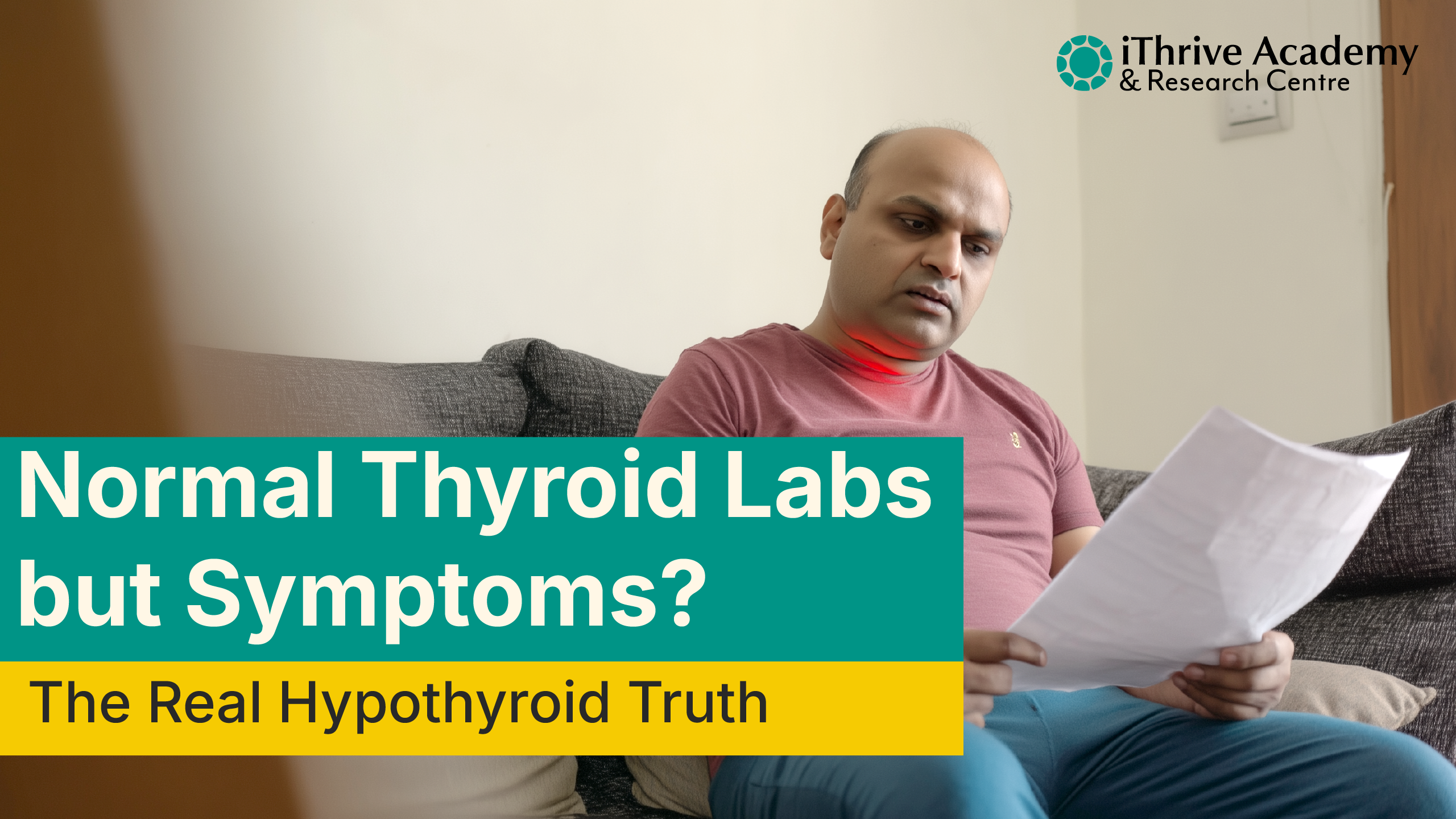
In clinics across India, millions of patients walk in with a familiar story. Their hair is thinning, their energy is low, they cannot lose weight no matter what they do, sleep feels unrefreshing, and their mind often slips into fog. They describe a body that feels slow, heavy, and unresponsive. And yet their doctor looks at the labs and says the same sentence almost every time:
“Your thyroid reports are normal.”
This gap between how someone feels and what a paper shows has quietly become one of the biggest blind spots in Indian healthcare. Hypothyroidism symptoms affect a significant portion of the population, especially women, but our testing methods often miss the deeper dysfunction.
The truth is clear.
Normal thyroid levels on paper do not always mean the thyroid is actually functioning well.
And increasingly, both research and functional nutrition show that relying solely on standard thyroid labs results in delayed diagnoses, overlooked symptoms, and years of unnecessary suffering.
This is exactly why iThrive Academy, the first academy in India to teach Functional Nutrition has made advanced thyroid interpretation a crucial part of its curriculum. Their Thyroid Educator Short Course dives deep into real thyroid physiology, the hidden markers doctors often skip, and how to truly understand what the body is trying to say.
Let’s explore why normal thyroid labs do not always mean you’re fine, and how real hypothyroid symptoms often reveal more than the standard tests ever will.
Where Conventional Thyroid Testing Goes Wrong
Most people assume that if their TSH is “normal,” their thyroid is fine. Unfortunately, TSH alone cannot reflect how your thyroid is actually functioning at the cellular level.
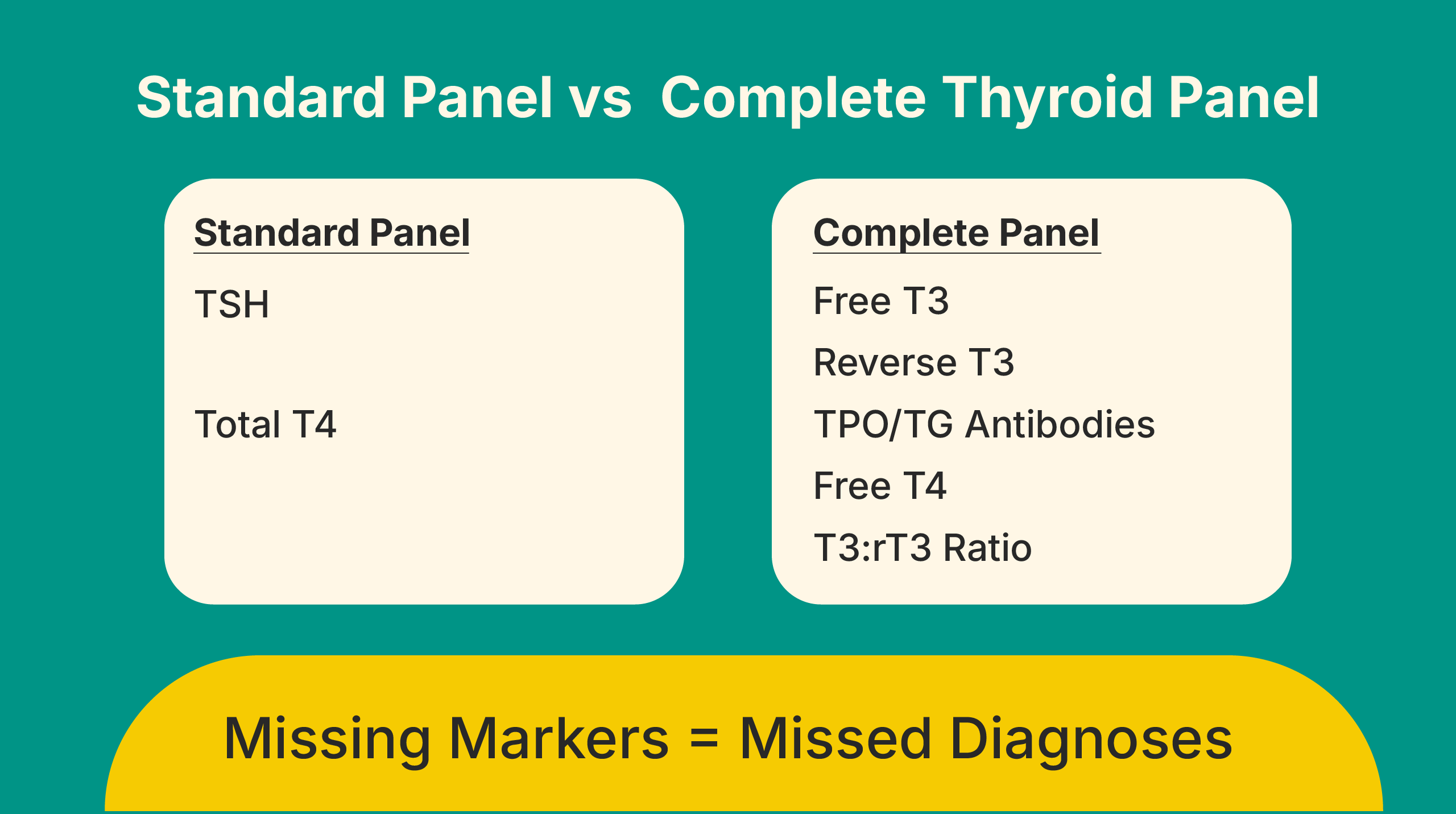
Conventional medicine typically checks only a couple of markers: TSH and T4.
While important, these two numbers cannot give a complete picture of thyroid health. Thyroid physiology is far more complex, involving conversion pathways, cellular uptake, inflammation markers, antibodies, and metabolic functions that the standard panel simply cannot detect.
.webp)
1. Limited Markers = Limited Answers
Most thyroid panels do not include:
Most standard thyroid tests include only:
- TSH
- Total T4
This misses crucial information like:
- Free T3
- Free T4
- TSH (TPO, TGAB & TRAP)
- TSH
Without these, practitioners often overlook conversion issues, autoimmune dysfunction like Hashimoto’s disease, and cellular hypothyroidism. Thyroid
At iThrive Academy’s Thyroid Educator Certification Short Course, students learn how each of these markers works, why they matter, and how to interpret them holistically.
2. TSH Ranges Are Too Wide
A big reason people stay undiagnosed is the outdated TSH reference range.
Conventional ranges go up to 4.0 μIU/mL. But research shows that:
- A TSH above 2.0 μIU/mL may already indicate early thyroid dysfunction.
- Women with TSH between 1.5 and 2.4 have a statistically higher risk of coronary mortality compared to those with optimal levels (0.5 to 1.4).
So yes, you can have your thyroid labs “normal” and still feel or rather be the other way round.
3. TSH Can Be Artificially Suppressed
TSH is influenced by more than thyroid function. Things that can falsely lower TSH include:
- Chronic stress (elevated cortisol)
- Inflammation
- Severe dieting
- Overexercising
This means someone can have free T3, T4, but still be told they’re “fine.”
This is why our functional nutrition approach at iCFN teaches students to look at patterns, physiology, and metabolic symptoms, not just numbers.
4. Thyroid Resistance Often Goes Undetected
Thyroid resistance happens when your thyroid hormones exist in the bloodstream but cannot enter the cells effectively.
In this condition:
- TSH looks normal
- T4 looks normal
- T3 may look normal
- But the person has all classic hypothyroid symptoms
There is currently no lab test that directly measures cellular receptor function, which is why symptoms and metabolic markers matter more than ever.
The Hidden Markers That Reveal Real Thyroid Dysfunction
Even when the standard labs appear perfect, deeper metabolic markers often uncover the underlying issue.
Reverse T3 (rT3): The Metabolic Brake
When the body is stressed, inflamed, or going through nutritional deficiencies, T4 gets converted into reverse T3, an inactive hormone that slows metabolism.
A Free T3 to rT3 ratio below 0.2 strongly indicates tissue-level hypothyroidism.
Cholesterol Levels: A 100-Year-Old Thyroid Indicator
High cholesterol, especially high LDL, often signals low thyroid function.
Thyroid hormones help convert cholesterol into steroid hormones, and when the thyroid slows down, cholesterol rises.
Iron and Ferritin: The Overlooked Keys
Iron is essential for TPO activity, the enzyme responsible for thyroid hormone synthesis.
Low ferritin or low serum iron is commonly found in people with:
- Hypothyroidism
- Subclinical hypothyroidism
- Hashimoto’s disease
This is why functional nutrition always includes nutritional status assessment, a topic emphasized heavily inside the iThrive Certified Functional Nutrition Course.
The Real Symptoms of Hypothyroidism (Even With Normal Labs)
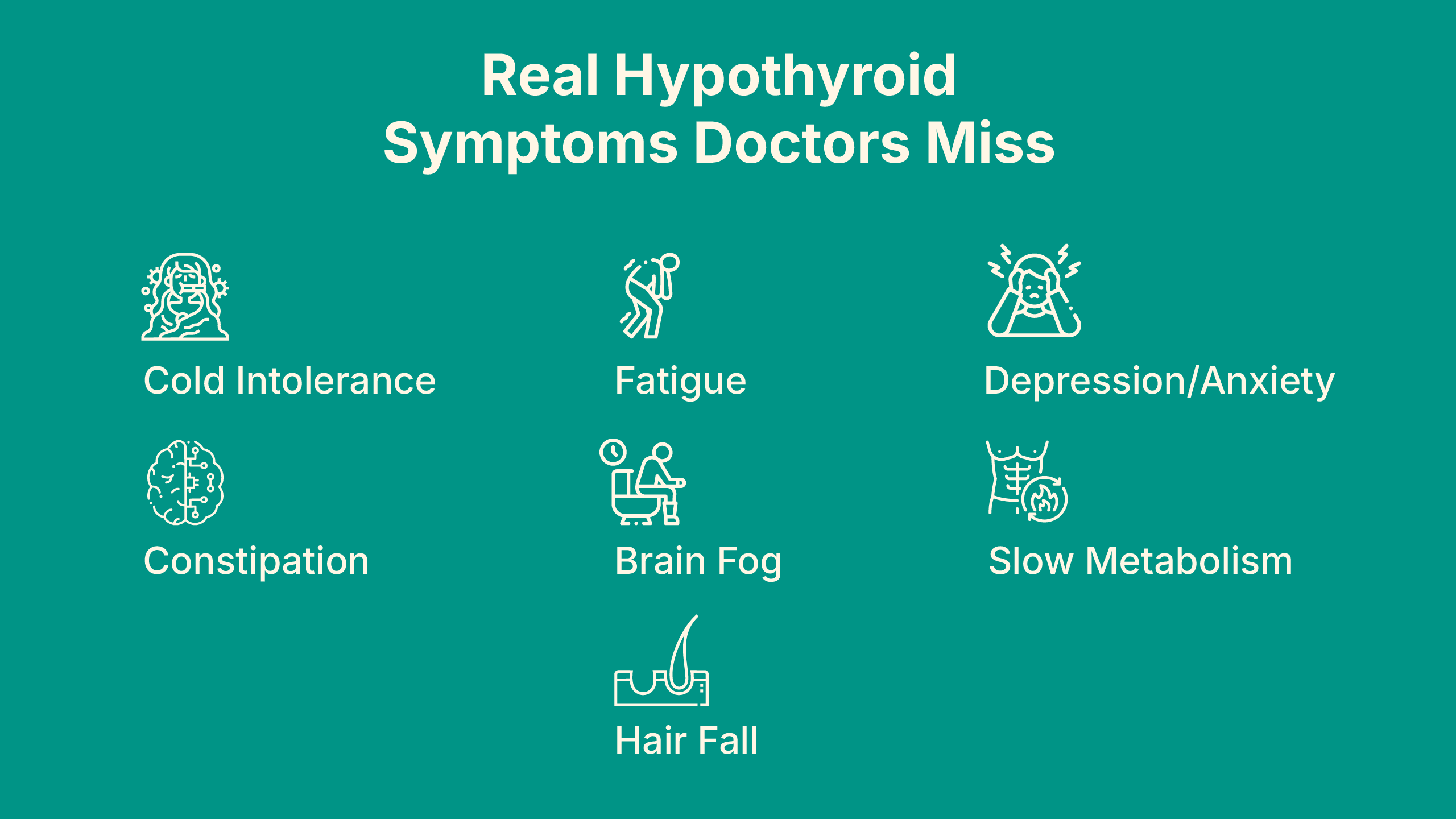
Symptoms tell the truth that bloodwork sometimes hides.
Functional practitioners are trained to listen to the body and then align it with numbers. Some of the most reliable hypothyroidism symptoms include:
- Persistent fatigue
- Difficulty losing weight
- Cold intolerance
- Dry skin, thinning hair, brittle nails
- Constipation
- Brain fog
- Depression and anxiety
- Menstrual irregularities
You can also read our blog on “Are Your Thyroid Issues Actually Hashimotos” which many of our students refer to while learning differential diagnosis.
Why Functional Nutrition is the Ultimate Link
Functional nutrition looks at the body as a connected system rather than isolated lab numbers.
It considers:
- Root causes
- Cellular metabolism
- Nutrient deficiencies
- Stress patterns
- Hormonal communication
- Blood markers
- Symptoms
- Physiological measurements
This is why iThrive Academy is the first academy in India to teach functional nutrition in a structured, scientific, mentorship-based format.
Students enrolling in the iThrive Certified Functional Nutrition Course report that thyroid physiology becomes one of the most fascinating modules. And rightly so, thyroid dysfunction often underlies fatigue, infertility, mood issues, weight problems, and chronic inflammation.
Interested in Mastering Thyroid Science? Explore the Thyroid Educator Course
If the science in this blog resonated with you, you will absolutely love the Thyroid Educator Short Course by iThrive Academy.
This course helps you:
- Understand TSH vs T3 vs T4 more accurately
- Assess hidden thyroid markers
- Identify subclinical hypothyroidism
- Decode Hashimoto’s patterns
- Understand root-cause thyroid healing
- Learn practical tools for evaluating symptoms
- Build confidence as a practitioner
It is a perfect starting point for those preparing to join the ICFN functional nutrition program, or for existing practitioners who want deeper thyroid expertise.
Final Thoughts
At iThrive Academy and Research Centre, our mission extends beyond teaching. We believe in creating a new generation of practitioners who understand the human body through the lens of root cause healing.
Empower
We equip learners with the clarity, confidence, and tools they need to decode complex thyroid cases, trust real physiology, and take charge of their own health as well as that of their clients.
Pioneer
We lead India’s shift from outdated, symptom-suppressing models to functional medicine and functional nutrition. We encourage students to unlearn the old and relearn what truly heals.
Transform
Our programs don’t just teach information. They transform people. Students become practitioners who heal, lead, educate, and inspire lasting change in their communities.
If you’re ready to understand the thyroid deeply and move beyond “normal labs,” explore the Thyroid Educator Course or join the iCFN Course.
This is your pathway to empowered, pioneering, transformative healing.






.jpg)