
Introduction
There is a kind of patient you might have surely recognised after a certain point. They are not acutely unwell, not in much visible distress, and surely not dealing with anything that appears to be quite alarming on the paper. In reality, most of their reports come back as “normal.” And yet something seems to be not right. They struggle explaining it to you, they just describe feeling slower than usual, forgetting words mid-sentence, and reading the very same thing again and again before they register. Apart from all these factors they are still managing to function, show up at work, meet end-to-end responsibilities, but not feel like themselves anymore. This is exactly what is called brain fog.
And more often than not, it gets dismissed as burnout, stress, or simply a part of modern life. But if you start observing such cases very closely, a different pattern begins to emerge. This is not just psychological, it is rather physiological. It’s the signalling of the body that something deeper is not working as efficiently as it should.
What Causes Brain Fog
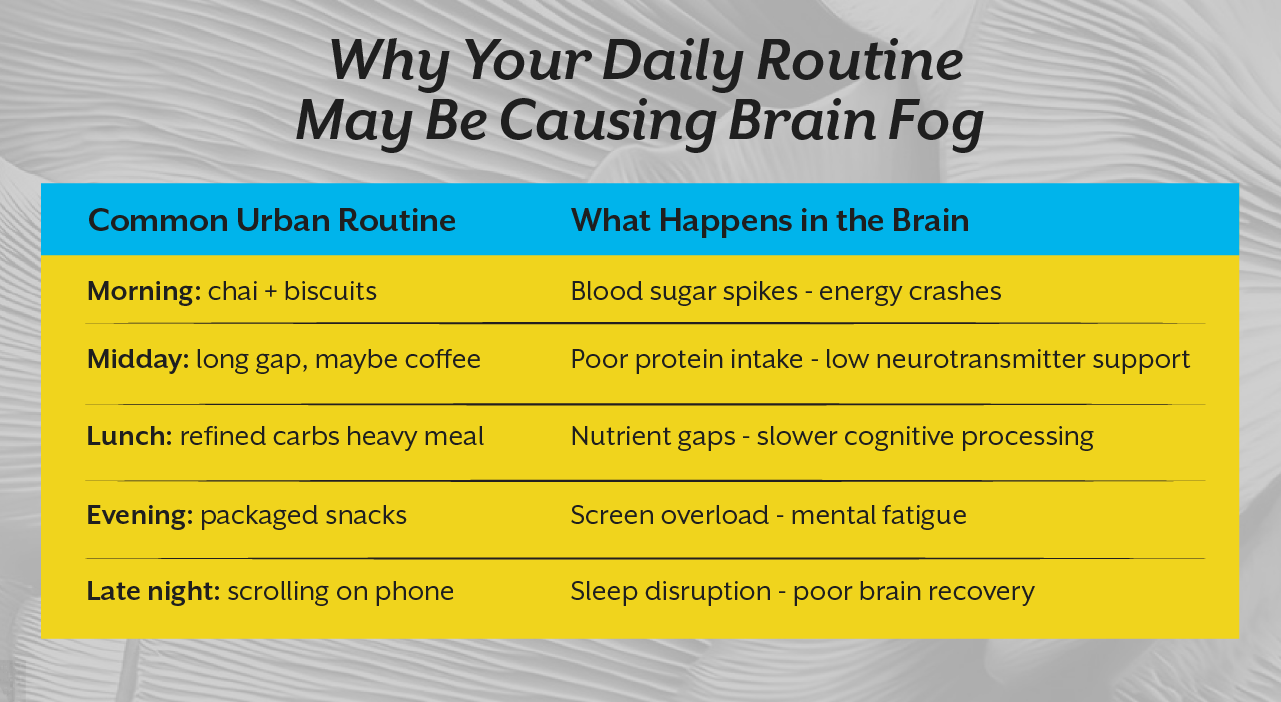
First things first. Brain fog is not a diagnosis in itself. It is rather a manifestation of underlying imbalances. In majority of the cases, it potentially reflects as a combination of chronic low grade inflammation, nutrient insufficiencies, low brain energy, and unstable blood sugar that quietly interferes with how the brain actually functions.
For certain individuals, gut health plays a crucial role. For others, it’s a matter of poor energy production at a cellular level. In many cases, you might have noticed it’s not a single cause but a bulk layering of multiple small dysfunctions that eventually reaches a point wherein the brain begins to slow down.
This is why brain fog feels so vague yet so persistent. It doesn't come from one concise source, but rather from systems that no longer work in harmony.
What Brain Fog Actually Is
When patients describe brain fog, they are rarely talking about the fatigue alone. They’re describing a loss of clarity, a very strong sense that their thinking is no longer sharp, that their minds feel too much clouded, and that even the simplest of cognitive tasks need more effort than ever before.
At a deeper level, this often reflects 2 primary disturbances. The very first one is a drop in efficient energy production within the brain cells. The second one is the presence of inflammation that interferes with neuronal communication. The brain is super sensitive to both. It is heavily dependent on a constant and stable supply of energy, along with a relatively calming internal environment. When either of these factors are compromised, clarity is one of the very first things to go.
Why Brain Fog Is Often an Energy Problem
One of the most revealing things patients say is that they are still doing everything they used to, but it feels harder to think. This distinction is very crucial as it shifts the emphasis away from motivation and towards energy.
The brain is one of the most energy demanding organs in the body. It needs a continuous supply of ATP to maintain focus, cognitive speed, and memory. When energy production becomes quite inefficient, the brain doesn't compensate well. Instead, it slows down.
This inefficiency is often not dramatic enough to show up in a standard testing, but it is enough to be felt subjectively. Nutrients such as magnesium bisglycinate and B Complex play an eminent role here. Even subtle gaps can affect how effectively energy is utilised and produced. The result is a state wherein the person is neither exhausted nor entirely functional. They exist somewhere in between, wherein thinking feels much like an effort.
Brain Fog and Gut Health
Another layer that frequently goes unnoticed is the mere connection between the gut and the brain. Many patients with brain fog do not initially report digestive issues, yet when you start exploring further, patterns begin to appear. They might feel bloated after consuming meals, react to certain foods, or even experience inconsistent digestion.
The brain and the gut are in constant communication via the immune system and various signalling pathways. When the gut lining becomes very compromised, substances that are normally contained within the intestine can enter the bloodstream. This triggers an immune response, further resulting in inflammation that can eventually extend beyond the gut.
When this inflammation reaches the brain, it begins to affect how neurons communicate with each other. The result is not always discomfort or pain. Often, it’s simply a reduction in clarity. Patients feel very slower, less focused, and mentally fatigued without a concise reason. Over time, this develops a loop. The person tries to push through, but the underlying imbalance continues to persist.
The Nutritional Gaps Behind Brain Fog

One of the most overlooked aspects of brain fog is how strongly it is tied to nutrient status. The majority of the individuals consume enough calories, but their diets lack the micronutrients needed for optimal brain function.
Vitamin B12 as well as iron are specifically crucial in this context, especially in Indian populations wherein the deficiencies are quite common. Even borderline low levels can truly affect the delivery of oxygen and neurological function, leading to symptoms such as fatigue, reduced concentration, and poor memory.
Vitamin D3 K2, often linked only with bone health, plays a far more major role in brain function that most people realise. Low levels are frequently associated with minimal cognitive resilience and a general sense of mental dullness.
Marine Omega 3 fatty acids are another significant gap. They are essential for maintaining the structure and function of brain cells. Diets low in Omega 3 tend to promote inflammation and reduce the efficiency of communication amongst neurons. There are also nutrients like choline, which are rarely discussed but are crucial for memory and learning. When these are lacking, the effects are subtle but noticeable over time.
The Lifestyle Patterns That Worsen Brain Fog
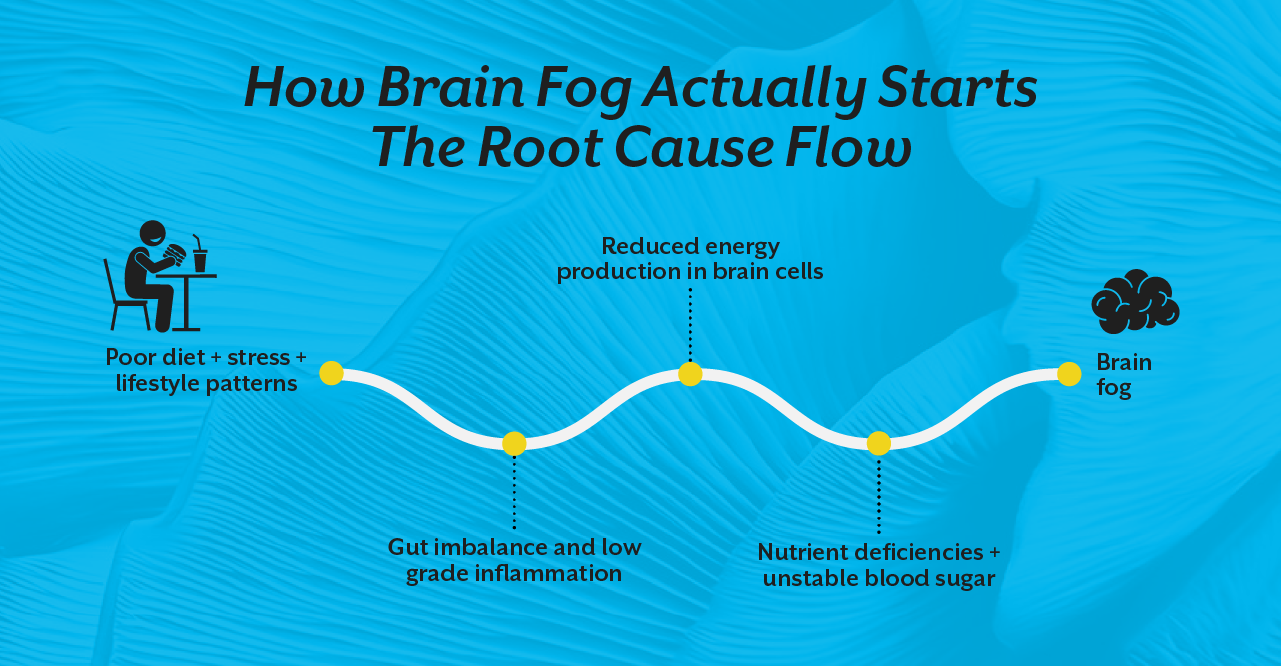
In majority of the cases, it’s not just deficiencies or any dysfunction, but rather it is daily patterns that quietly contribute to a particular problem. A typical daily routine for many working individuals includes starting the day with tea and refined carbs like biscuits, followed by long gaps without food, and then later quite heavy meals in the day.
This develops a lot of fluctuation in the blood sugar that directly impacts the brain. When the blood sugar rises and then falls rapidly, the brain witnesses inconsistent supply of fuel, which can eventually manifest as poor focus, irritability, and fatigue.
Patterns of breathing also play a major role, although they are rarely considered. Many individuals tend to breathe in a certain way that reduces levels of carbon dioxide, which eventually affects how oxygen is potentially delivered to tissues. Even when oxygen is present in the blood, it might not be efficiently utilized by the brain.
Then there is the constant stimulation from screens as well as multitasking. The brain is rarely given an opportunity to rest and reset. Over time, this reduces cognitive resilience and makes it very hard to maintain clarity.
How to Get Rid of Brain Fog Naturally
Addressing brain fog needs a significant shift away from quick fixes and towards a more foundational approach. The emphasis is not on stimulating the brain, but rather on supporting the systems that permit it to function optimally.
Stabilising blood sugar is often one of the very first steps. This includes building meals around proteins and minimising dependency on refined carbs, specifically at the start of the day. When the brain receives a steady fuel supply, the majority of the symptoms start improving.
Rebuilding nutrient status is equally as important. This involves ensuring sufficient intake of magnesium bisglycinate, B Complex, Marine omega 3, and other essential nutrients. In some cases, targeted supplementation might be required to restore optimal levels.
Supporting gut health can have a significant impact, particularly for individuals with underlying inflammation. Improving dietary quality, increasing fibre intake, and addressing food sensitivities can help restore balance over time.
Finally, attention must be given to energy production at a cellular level. This involves reducing sources of chronic stress, improving recovery, and creating conditions where the body can produce and utilise energy more efficiently.
Why This Matters for Practitioners
Brain fog is often treated as a minor or secondary complaint, but it is rarely insignificant. It is often one of the earliest indicators that something within the system is not functioning optimally.
For practitioners, this presents an opportunity to look beyond surface level explanations and begin connecting patterns. A patient presenting with brain fog may also have subtle signs of nutrient deficiencies, gut imbalance, or metabolic dysfunction that have not yet been fully recognised.
At iThrive Academy, this way of thinking is central to the learning process. Inside the iThrive Certified Functional Nutrition program, practitioners are trained to interpret symptoms like brain fog not as isolated complaints, but as meaningful signals that point towards deeper imbalances. This approach allows for a more comprehensive understanding of the patient and creates the possibility of addressing the root causes rather than simply managing the symptoms.
Key Takeaway
Brain fog is not something that appears without reason. It is not simply a byproduct of a busy life or something that needs to be pushed through. It is a signal from the body that something is not working as efficiently as it should. When you begin to look at it through a functional lens, it becomes clearer that brain fog is often the result of disruptions in energy production, inflammation, nutrient status, and overall metabolic balance. The more important shift, however, is not just in understanding what causes it, but in recognising that it can be addressed. And that begins with asking a better question, not just how to get rid of brain fog, but why it started in the first place.








.jpg)