
Introduction
If you have worked with patients suffering from chronic fatigue syndrome, you have likely encountered one of the most frustrating clinical patterns in modern medicine. Patients describe overwhelming exhaustion that does not improve with rest. Many report brain fog, poor concentration, sleep disturbances, muscle pain and an inability to tolerate even mild physical activity. Yet when routine blood tests are conducted, the results often appear largely normal. The patient is told their labs look fine, and the diagnosis eventually becomes chronic fatigue syndrome.
This is where many practitioners feel stuck. Standard clinical frameworks are not designed to fully explain chronic fatigue immune dysfunction syndrome. Because obvious pathology is difficult to detect through conventional diagnostics, the condition is frequently misunderstood or minimized. Some patients spend years moving between specialists without receiving a clear explanation of what is happening in their bodies.
However, a growing body of research suggests that the answer may lie deeper at the cellular level. Chronic fatigue syndrome is increasingly being linked to mitochondrial dysfunction and cellular energy failure. When mitochondria fail to produce adequate ATP, the body simply cannot sustain normal physiological activity. Every system begins operating under an energy deficit.
For practitioners willing to examine chronic fatigue syndrome through a systems biology perspective, the condition begins to make far more sense. It is not simply fatigue. It is a systemic disorder involving energy metabolism, immune signaling, and nervous system regulation.
Understanding Chronic Fatigue Immune Dysfunction Syndrome
Chronic fatigue syndrome, also known as chronic fatigue immune dysfunction syndrome, represents one of the most complex multi system conditions encountered in clinical practice. Patients do not simply experience tiredness. Instead, they experience a profound collapse in physical stamina that affects nearly every aspect of daily life. Tasks that once required minimal effort suddenly become exhausting.
One of the hallmark features of chronic fatigue syndrome is post exertional malaise. After even minor physical or mental activity, patients may experience worsening fatigue that can last for hours or even days. This response suggests that the body is unable to adequately recover from metabolic stress.
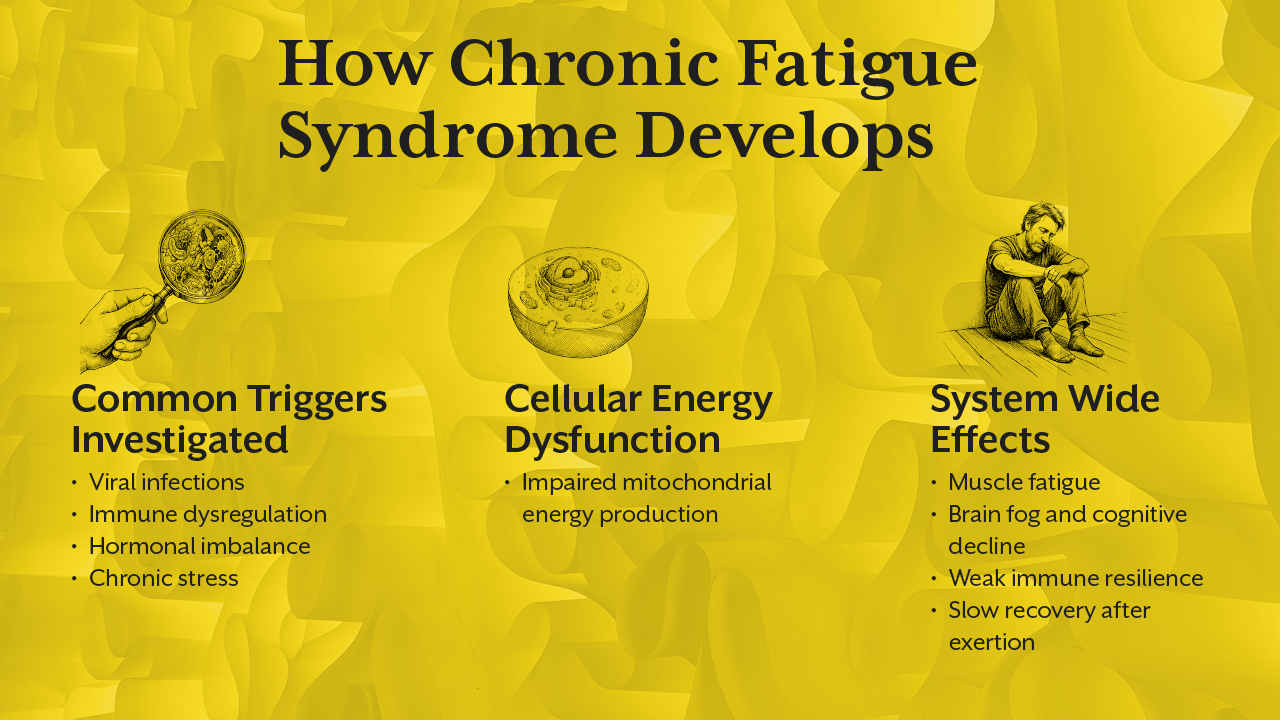
Historically, several explanations have been proposed for chronic fatigue syndrome causes. Viral infections, immune dysregulation, hormonal imbalance and chronic stress have all been investigated as possible triggers. While each of these factors may play a role, they rarely explain the full clinical picture on their own.
Increasingly, researchers are recognizing that these triggers may converge on a common pathway: impaired cellular energy production. When the body cannot generate sufficient ATP, every system becomes compromised. Muscles fatigue quickly, cognitive performance declines, immune defenses weaken and recovery processes slow down.
For practitioners, this realization shifts the clinical conversation from symptom management toward understanding the underlying biology of cellular energy dysfunction.
The Mitochondrial Energy Crisis
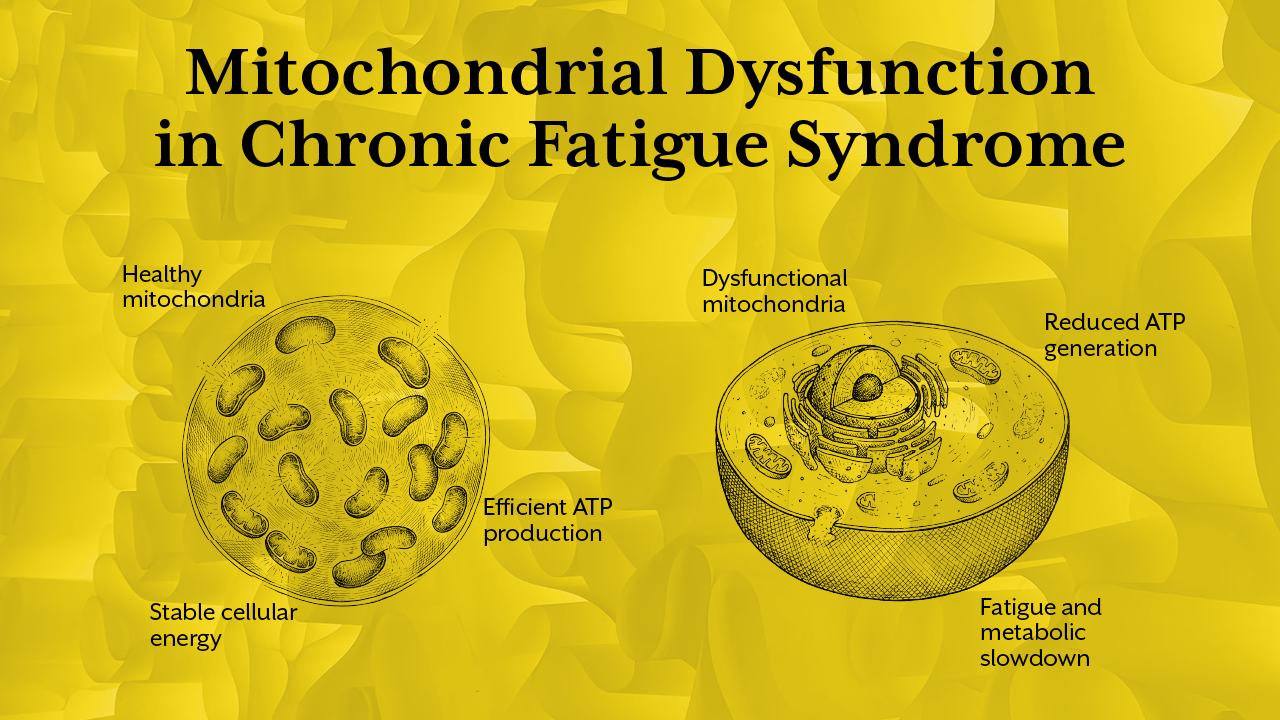
To truly understand mitochondrial dysfunction chronic fatigue, practitioners must look at how energy is generated inside the cell. Mitochondria are responsible for producing ATP, the molecule that powers nearly every biological process in the body. From muscle contraction to neurotransmitter production, cellular energy is essential for normal physiological function.
When mitochondrial efficiency declines, the consequences extend far beyond fatigue. Muscle cells struggle to maintain endurance, neurons lose the energy required for optimal signaling, and immune cells become less capable of mounting appropriate responses to infection. In this context, fatigue is not merely a symptom. It is a biological signal that the body’s energy producing systems are underperforming.
Several studies investigating chronic fatigue syndrome have identified abnormalities in mitochondrial respiration, oxidative phosphorylation, and ATP production. Some researchers describe this phenomenon as an “energy envelope collapse,” where patients operate at a drastically reduced metabolic capacity.
This perspective reframes chronic fatigue syndrome as a metabolic disorder. The problem is not simply that patients feel tired. The body literally lacks the energy required to sustain normal function.
The Immune System Connection
Another important dimension of chronic fatigue immune dysfunction syndrome involves the immune system. Many patients report that their symptoms began following a viral infection. Infections such as Epstein Barr virus, cytomegalovirus and other pathogens have been investigated as potential triggers for the condition.
One theory suggests that certain infections disrupt immune regulation, leading to a chronic low grade inflammatory state. Instead of resolving after the infection clears, the immune system remains in a persistent state of activation. This ongoing inflammatory signaling can interfere with mitochondrial function and cellular metabolism.
The immune system itself requires significant energy to operate effectively. When mitochondrial capacity is compromised, immune cells may struggle to maintain proper regulatory balance. This can result in immune dysregulation where inflammatory signals persist longer than they should.
For practitioners, this interaction between immune activation and mitochondrial function is an important clinical insight. Chronic fatigue syndrome may represent the intersection between immune dysfunction and metabolic energy failure.
The Nervous System and Energy Regulation
Another piece of the chronic fatigue puzzle lies within nervous system regulation. Many patients with chronic fatigue syndrome exhibit signs of autonomic nervous system imbalance, particularly reduced parasympathetic activity. This imbalance means the body struggles to transition into the restorative state required for recovery and repair.
The autonomic nervous system regulates heart rate, digestion, stress responses and energy distribution throughout the body. When this system becomes dysregulated, the body may remain in a constant state of stress signaling. This persistent stress state can further strain mitochondrial energy production and worsen fatigue symptoms.
Researchers studying heart rate variability in chronic fatigue syndrome patients often observe reduced vagal tone. Low vagal tone indicates diminished parasympathetic activity and impaired nervous system resilience. In practical terms, this means the body cannot efficiently recover from physical or psychological stressors.
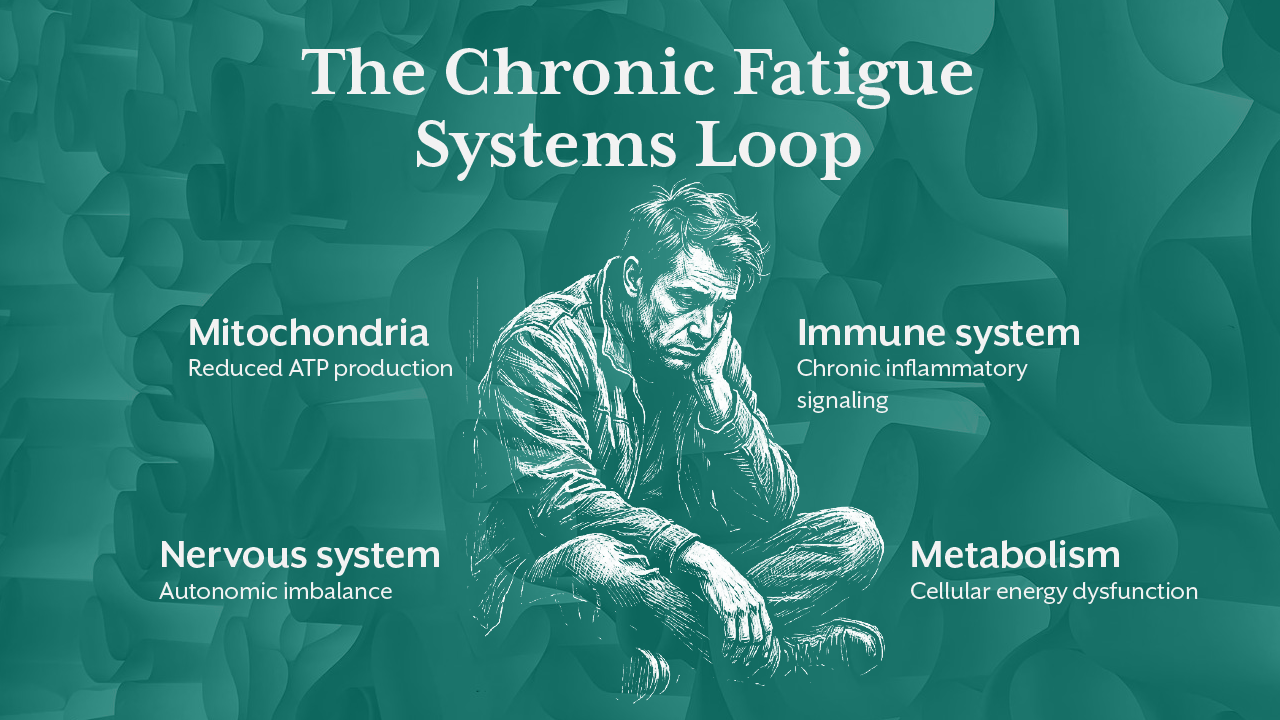
For clinicians, this is where chronic fatigue syndrome intersects with broader concepts of systems physiology. Energy metabolism, immune signaling and nervous system regulation are not separate processes. They operate together as part of a complex regulatory network.
Why Conventional Approaches Often Fail
One of the reasons chronic fatigue syndrome remains difficult to treat is that most conventional interventions focus primarily on symptom management. Patients may receive medications for sleep disturbances, antidepressants for mood symptoms, or advice to gradually increase physical activity.
While these approaches may provide limited support, they rarely address the underlying physiological drivers of the condition. If mitochondrial dysfunction, immune dysregulation and nervous system imbalance remain unresolved, fatigue often persists.
This is why many patients continue to search for answers long after their initial diagnosis. They sense that something deeper is occurring within their physiology that has not yet been fully addressed.
Educational platforms such as iThrive Academy increasingly emphasize this system's perspective. Rather than viewing chronic diseases in isolation, practitioners are trained to evaluate how metabolic health, nervous system regulation and immune signaling interact to influence disease progression. Courses such as the iCFN certification introduce clinicians to functional frameworks that explore root causes of chronic illness rather than focusing solely on symptom suppression.
A Systems Biology Perspective for Practitioners
For practitioners interested in helping chronic fatigue syndrome patients more effectively, adopting a systems biology framework can significantly expand clinical insight. Instead of asking only what symptoms the patient experiences, clinicians begin asking deeper questions about physiological regulation.
What factors are impairing mitochondrial energy production? How is the immune system responding to past infections? Is the nervous system trapped in chronic stress signaling? Are metabolic pathways receiving the nutrients required for optimal function?
When these questions guide clinical investigation, chronic fatigue syndrome begins to look less mysterious. It becomes a condition shaped by interactions between energy metabolism, immune function and nervous system balance.
Practitioners who pursue advanced training in functional medicine often report that this shift in perspective transforms their approach to chronic illness. Conditions that once appeared puzzling begin to reveal identifiable physiological patterns.
Key Takeaway
Chronic fatigue syndrome challenges one of the most common assumptions in clinical medicine. Fatigue is not always a psychological symptom or a simple lifestyle issue. In many cases it reflects a deeper biological problem involving cellular energy production. Mitochondrial dysfunction, immune dysregulation and nervous system imbalance collectively shape the physiology of chronic fatigue immune dysfunction syndrome. When practitioners examine these interconnected systems rather than focusing solely on symptoms, the condition becomes far more understandable. For clinicians committed to expanding their knowledge of chronic disease mechanisms, chronic fatigue syndrome offers a powerful reminder that the body’s energy systems play a central role in long term health.