
Introduction
If you work with chronic illness patients, you have probably encountered a familiar pattern with fibromyalgia. A patient walks into the clinic describing persistent widespread pain, fatigue, sleep disruption, and brain fog. Conventional investigations often appear unremarkable. Imaging rarely shows structural damage, and laboratory reports frequently fall within reference ranges. Eventually, the patient receives a diagnosis of fibromyalgia. From that point onward, management usually revolves around symptom control. Antidepressants, sleep medications, and mild analgesics are commonly prescribed, and the patient is advised to “manage stress” and stay active.
However, a question worth asking as a practitioner is why long term outcomes remain disappointing. Many patients continue to experience worsening fatigue, cognitive dysfunction, and persistent pain despite ongoing treatment. This raises a fundamental issue in clinical understanding. Fibromyalgia is often approached purely as a pain disorder, yet the physiology underlying the condition is far more complex. Increasing evidence suggests that fibromyalgia is better understood as a systems level disorder involving nervous system dysregulation, altered neurotransmitter signaling, mitochondrial dysfunction, and chronic stress physiology. When these deeper mechanisms are considered, fibromyalgia begins to look less like a localized musculoskeletal condition and more like a neuro metabolic disorder that affects multiple regulatory systems. Recognizing this distinction changes the way practitioners evaluate and treat fibromyalgia patients.
The Clinical Problem: Why Fibromyalgia Is Frequently Misunderstood
Fibromyalgia misdiagnosis among practitioners remains surprisingly common, and the primary reason is educational. Traditional clinical training tends to approach pain disorders from a structural perspective. When patients report persistent pain, the assumption is that tissue damage must exist somewhere within muscles, joints, or connective tissue. Diagnostic tools are therefore designed to detect inflammation, injury, or degenerative changes within these structures. Fibromyalgia disrupts this model because patients frequently experience severe pain despite the absence of obvious structural abnormalities.
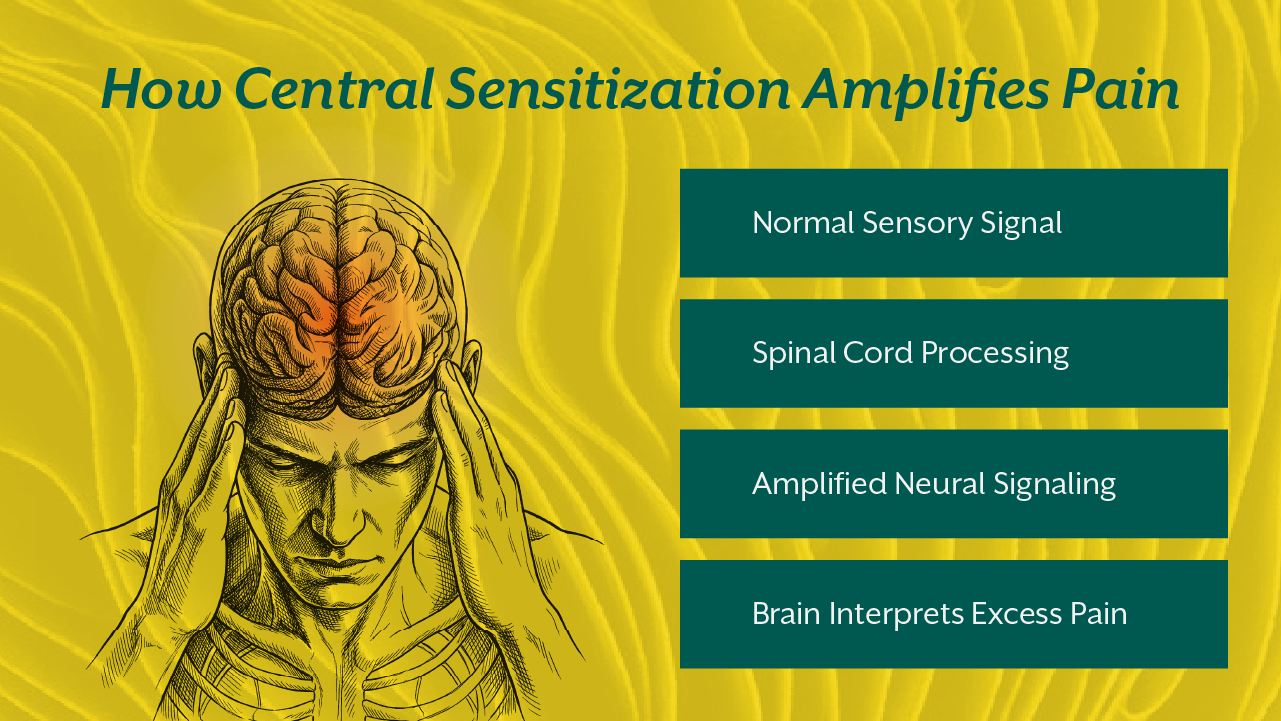
This disconnect has historically created confusion in clinical practice. For decades fibromyalgia was poorly understood, and some practitioners even dismissed it as a psychosomatic condition. Modern neuroscience, however, has provided a clearer explanation. Research now demonstrates that fibromyalgia involves altered pain processing within the central nervous system, a phenomenon referred to as central sensitization. In this state, sensory signals are amplified by the brain and spinal cord, causing the nervous system to interpret normal sensations as painful.
Understanding this concept is crucial for practitioners. If the nervous system itself has become hypersensitive, simply targeting peripheral pain sites will rarely produce lasting relief. The issue lies not within the muscles or joints but within the way the nervous system processes sensory information. This shift in perspective represents one of the most important advances in fibromyalgia research over the past two decades.
Central Sensitization: The Amplified Pain Network
To understand fibromyalgia properly, practitioners must understand central sensitization. Central sensitization occurs when neurons within the spinal cord and brain become hyper responsive to incoming sensory signals. Over time, the threshold for pain perception decreases significantly, meaning stimuli that would normally be perceived as mild or harmless begin to trigger strong pain responses. A light touch may feel uncomfortable, moderate pressure may feel severe, and even minor temperature changes can provoke discomfort.
The process does not involve sensory nerves alone. Central sensitization also alters neurotransmitter activity within the brain. Elevated glutamate levels, altered serotonin signaling, and dysfunctional dopamine pathways have all been documented in fibromyalgia patients. These neurochemical changes contribute to abnormal signal amplification within pain pathways, reinforcing the hypersensitive state of the nervous system.
These alterations also help explain why fibromyalgia symptoms extend far beyond pain. Patients frequently report cognitive dysfunction, mood disturbances, sleep disruption, and persistent fatigue. When viewed through a functional medicine lens, fibromyalgia begins to resemble a broader neuro metabolic condition affecting several interconnected regulatory systems rather than a single isolated disorder. Practitioners trained in integrative models increasingly recognize that addressing nervous system regulation is central to effective fibromyalgia care.
The Nervous System Component Most Practitioners Miss
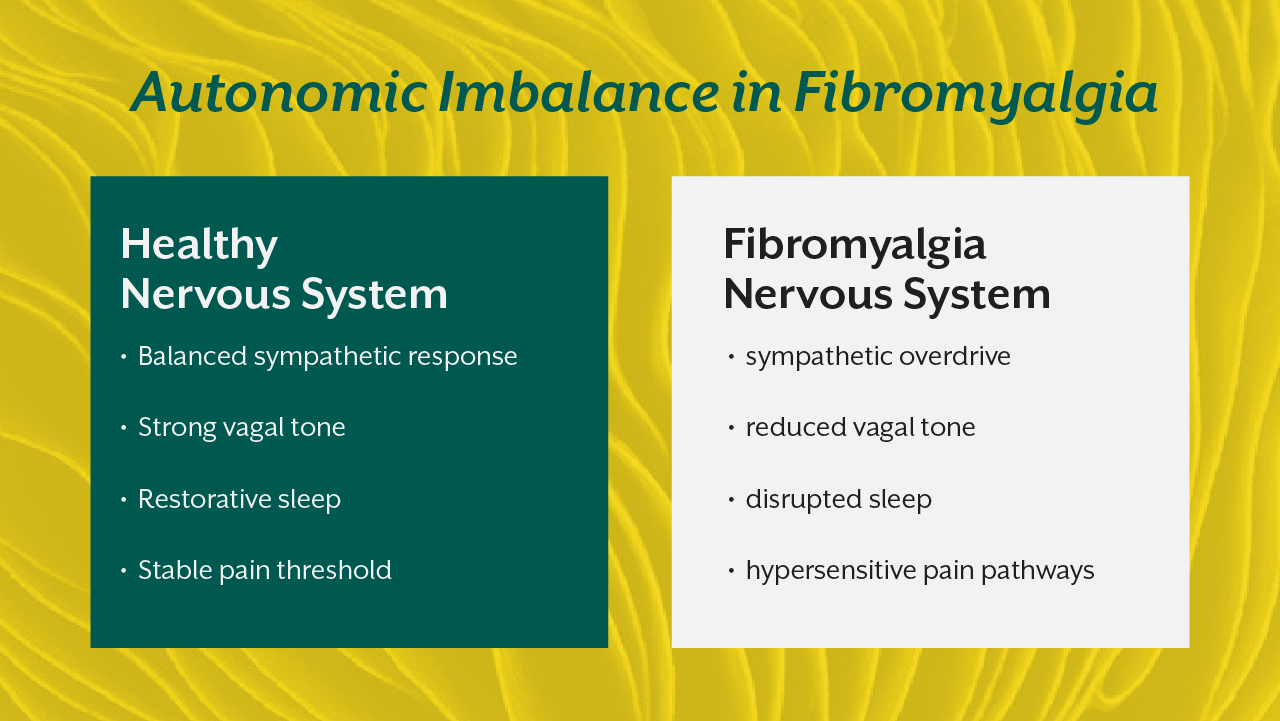
Another important factor that many practitioners overlook is the role of autonomic nervous system imbalance. Many fibromyalgia patients exhibit signs of persistent sympathetic dominance. The sympathetic nervous system governs the fight or flight response and is designed to activate during periods of acute stress. In healthy physiology, this response subsides once the perceived threat has passed, allowing the body to return to a parasympathetic rest and repair state.
In fibromyalgia patients, however, this reset mechanism often fails. The nervous system remains locked in a state of heightened alertness, which over time contributes to sleep disturbances, increased pain sensitivity, and impaired recovery capacity. Studies evaluating heart rate variability frequently show reduced parasympathetic activity in fibromyalgia patients, suggesting diminished vagal tone and poor nervous system resilience.
This is where concepts from polyvagal theory become clinically relevant. Polyvagal theory proposes that the vagus nerve plays a critical role in regulating stress resilience, inflammation, and emotional stability. When vagal tone is impaired, the body struggles to transition into the restorative state required for healing and tissue repair. This chronic autonomic imbalance may contribute to several symptoms commonly seen in fibromyalgia, including fatigue, digestive dysfunction, and hypersensitive pain pathways. For practitioners exploring fibromyalgia nervous system treatment strategies, improving autonomic regulation often becomes a central therapeutic goal.
The Mitochondrial Energy Link
Another emerging component of fibromyalgia physiology involves mitochondrial dysfunction. Many patients exhibit reduced cellular energy production, particularly within muscle tissue. When mitochondria fail to generate adequate amounts of ATP, muscle fibers fatigue quickly and struggle to maintain endurance. Over time this contributes to persistent soreness, weakness, and the characteristic fatigue experienced by many fibromyalgia patients.
The relationship between mitochondrial health and fibromyalgia extends beyond simple energy deficiency. Impaired mitochondrial function also increases oxidative stress and inflammatory signaling within tissues. These processes can further sensitize neural pathways and intensify central sensitization. As oxidative stress rises, the nervous system becomes even more reactive to sensory input, reinforcing the cycle of amplified pain perception.
This creates a biological feedback loop in which energy dysfunction worsens inflammation, inflammation worsens neural hypersensitivity, and neural hypersensitivity amplifies pain signals. Breaking this cycle requires practitioners to examine metabolic health alongside nervous system regulation rather than focusing exclusively on pain symptoms.

Why Conventional Treatment Often Falls Short
When fibromyalgia is treated purely as a pain disorder, therapy typically focuses on symptom suppression. Pain medications may temporarily reduce discomfort, sleep aids may help patients fall asleep, and antidepressants may stabilize mood. While these approaches can provide short term relief, they rarely address the biological drivers of the condition.
Central sensitization continues to operate in the background, autonomic imbalance remains unresolved, and mitochondrial dysfunction continues to impair cellular energy production. This explains why many patients experience temporary improvement followed by relapse. The underlying regulatory systems that drive fibromyalgia remain uncorrected.
For practitioners seeking more effective approaches, the key lies in expanding the clinical framework. Instead of asking only where pain occurs, clinicians begin asking deeper physiological questions. What is driving nervous system hypersensitivity? How is the stress response affecting autonomic balance? Are metabolic pathways such as mitochondrial energy production functioning optimally? This systems biology perspective forms the foundation of fibromyalgia integrative treatment protocols.
The Functional Medicine Framework for Fibromyalgia
Functional medicine approaches to fibromyalgia focus on restoring regulatory balance across multiple physiological systems. These may include nervous system regulation, metabolic resilience, immune signaling control, and sleep restoration. Practitioners trained in integrative medicine frequently evaluate stress physiology, gut microbiome health, circadian rhythm disruption, and mitochondrial function as potential contributors to fibromyalgia symptoms.
Addressing these underlying systems rarely produces instant symptom relief. However, it gradually creates the biological environment required for recovery. As nervous system regulation improves and metabolic pathways regain efficiency, many patients begin to experience reductions in pain sensitivity, improved energy levels, and better sleep quality.
For clinicians seeking deeper expertise, continuing education programs increasingly emphasize these integrative frameworks. Educational platforms such as iThrive Academy focus on teaching practitioners how chronic diseases emerge from interconnected physiological disruptions rather than isolated symptoms. Programs such as the iCFN provide practitioners with structured training in root cause medicine and systems biology approaches to chronic illness. Many clinicians report that this type of education fundamentally changes how they evaluate and treat complex conditions such as fibromyalgia.
Key Takeaway
Fibromyalgia challenges one of the most persistent assumptions in modern clinical medicine. Pain does not always originate from damaged tissues. In many cases the problem lies within the regulatory systems responsible for interpreting sensory signals. Central sensitization, autonomic imbalance, mitochondrial dysfunction, and chronic stress physiology collectively contribute to the fibromyalgia experience. When practitioners recognize these deeper mechanisms, fibromyalgia no longer appears as a mysterious pain syndrome but rather as a systems level disorder influenced by neurological, metabolic, and inflammatory pathways. For clinicians willing to expand their diagnostic perspective, fibromyalgia becomes an opportunity to apply integrative physiology and address the root biological drivers of chronic illness.