
Introduction
Most of us didn’t learn about diabetes incorrectly.
We just learned it incomplete.
We were taught to observe blood sugar, calculate HbA1c, and interpret rising glucose as the central event. For a long time, this feels logical. Sugar is measurable. Sugar is visible. Sugar is actionable.
But then comes the moment every serious learner eventually encounters, usually through clinical exposure, deeper study, or simply watching real people struggle despite “good control.”
Why does someone with acceptable glucose levels feel metabolically exhausted?
Why do insulin levels climb years before glucose does?
Why does treating blood sugar not necessarily restore metabolic health?
These questions don’t arise because glucose data is wrong. They arise because glucose is not the system, it is the output of a system.
The Metabolic Infrastructure Model invites us to step back and ask a more fundamental question:
What must break down inside the body for glucose to become dysregulated in the first place?
Glucose as a Signal, Not a Villain
One of the first conceptual shifts learners struggle with is letting go of glucose as the “enemy.” This doesn’t mean glucose is irrelevant, it means glucose is reactive, not causal.
In a metabolically healthy system, glucose moves efficiently from the bloodstream into cells, where it is converted into usable energy. Insulin acts as a signaling molecule, coordinating this process quietly and effectively. Blood sugar rises after meals, falls predictably, and rarely demands attention.
Problems begin only when this signaling network weakens.
When muscle cells respond sluggishly to insulin, when the liver continues producing glucose despite incoming fuel, and when fat tissue becomes inflamed and resistant, glucose begins to accumulate in the bloodstream. Importantly, this accumulation happens after years of internal compensation.
In this sense, elevated blood sugar is not the beginning of diabetes. It is the body’s way of saying that multiple energy-handling systems are no longer cooperating.
The Missing Concept - Metabolic Infrastructure
Here is where most education quietly skips a step.
We talk about insulin resistance, but we rarely explain what must structurally exist for insulin to work well in the first place. Insulin does not operate in isolation. It relies on a coordinated infrastructure that includes cell membranes, receptors, intracellular signaling pathways, mitochondrial energy production, and safe storage of excess fuel.
The Metabolic Infrastructure Model frames the body like a city managing energy flow. Glucose is the delivery truck. Insulin is the traffic signal. But the roads, warehouses, power plants, and waste systems must all function properly. If they don’t, traffic jams occur no matter how many signals you install.
This is why metabolic dysfunction can exist long before glucose appears abnormal. The infrastructure begins to strain under repeated load, and insulin compensates by working harder. Eventually, even high insulin is not enough to maintain order.
Insulin Resistance Is a Distributed Failure, Not a Single Defect
A common misconception learners carry early on is that insulin resistance happens “somewhere,” often vaguely attributed to muscle or fat. In reality, insulin resistance unfolds across multiple tissues, each contributing differently to metabolic dysfunction.
Skeletal muscle becomes less responsive to insulin’s signal to uptake glucose, reducing one of the body’s largest glucose disposal pathways. The liver, instead of shutting down glucose production after meals, continues releasing glucose into circulation. Adipose tissue, once a safe energy buffer, becomes inflamed and begins leaking fatty acids that further disrupt insulin signaling.
The pancreas responds heroically by producing more insulin, attempting to overcome this resistance. For years, this compensation works and glucose remains deceptively normal.
Compensation- The Phase We Rarely Teach
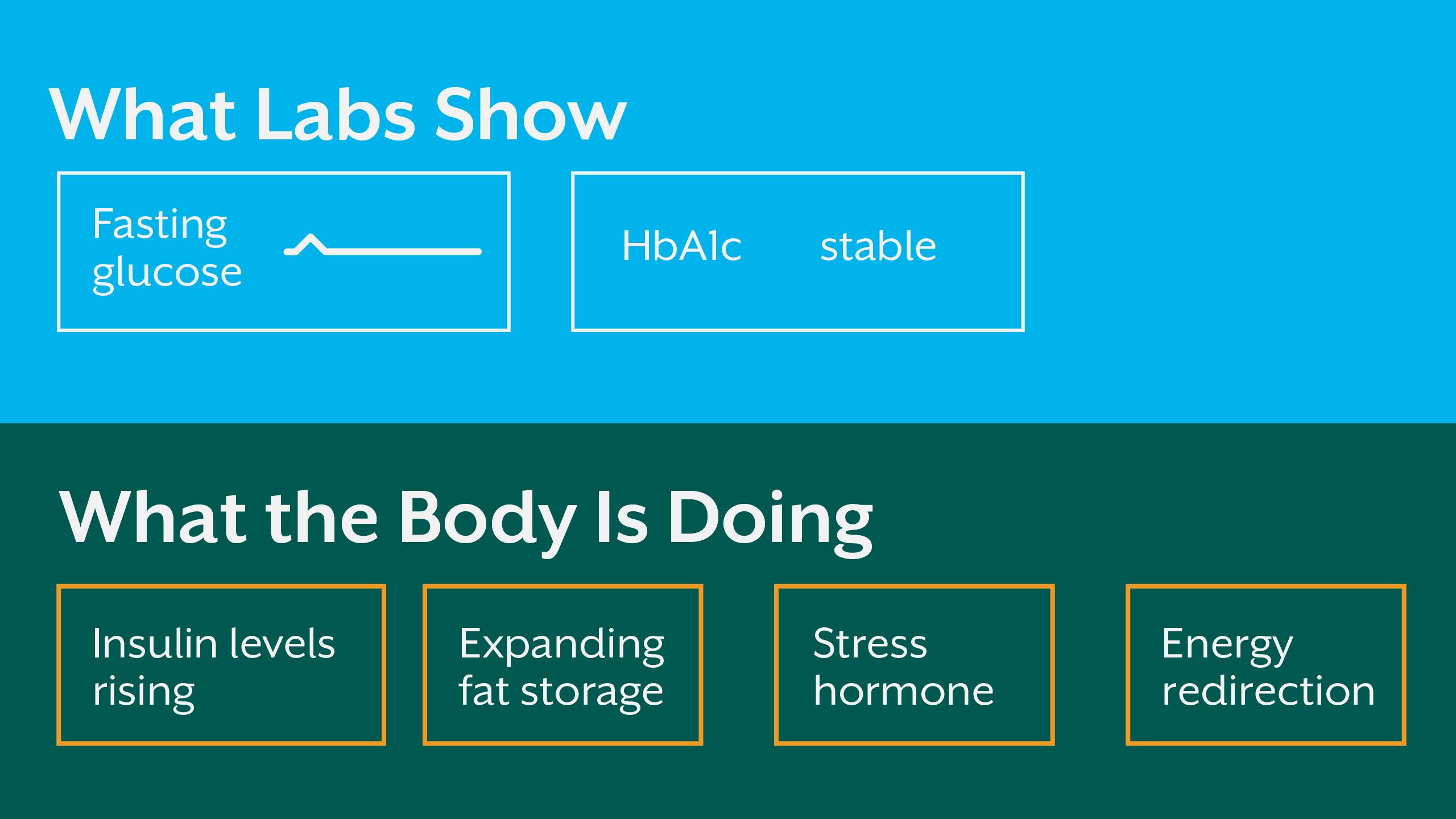
One of the most underappreciated phases in diabetes development is compensation. Before failure, the body adapts. Insulin rises. Fat tissue expands. Energy is redirected. Stress hormones support glucose availability.
From a survival perspective, this is brilliance. From a diagnostic perspective, it creates blind spots.
This is why individuals can appear “fine” in standard labs while metabolic strain silently accumulates. This pre-diagnostic phase is explored deeply in the iThrive Academy blog “Insulin Resistance as a Pre-Diagnostic State: Why Type 2 Diabetes Is a Late Label”, which aligns closely with the infrastructure model.
Metabolic Dysfunction as an Energy Crisis
Another insight learners often find transformative is reframing metabolic dysfunction as an energy-processing problem, not a willpower issue.
When mitochondria are overloaded, inefficient, or inflamed, cells struggle to convert fuel into usable energy. This leads to fatigue, poor exercise tolerance, weight gain resistance, and increased inflammatory signaling even when calorie intake appears controlled.
This explains why simply “eating less” often fails in metabolically compromised individuals. The issue is not excess fuel alone, but impaired utilization.
Reframing the Root Cause of Type 2 Diabetes
When viewed through the metabolic infrastructure lens, the causes of Type 2 diabetes become clearer and broader.
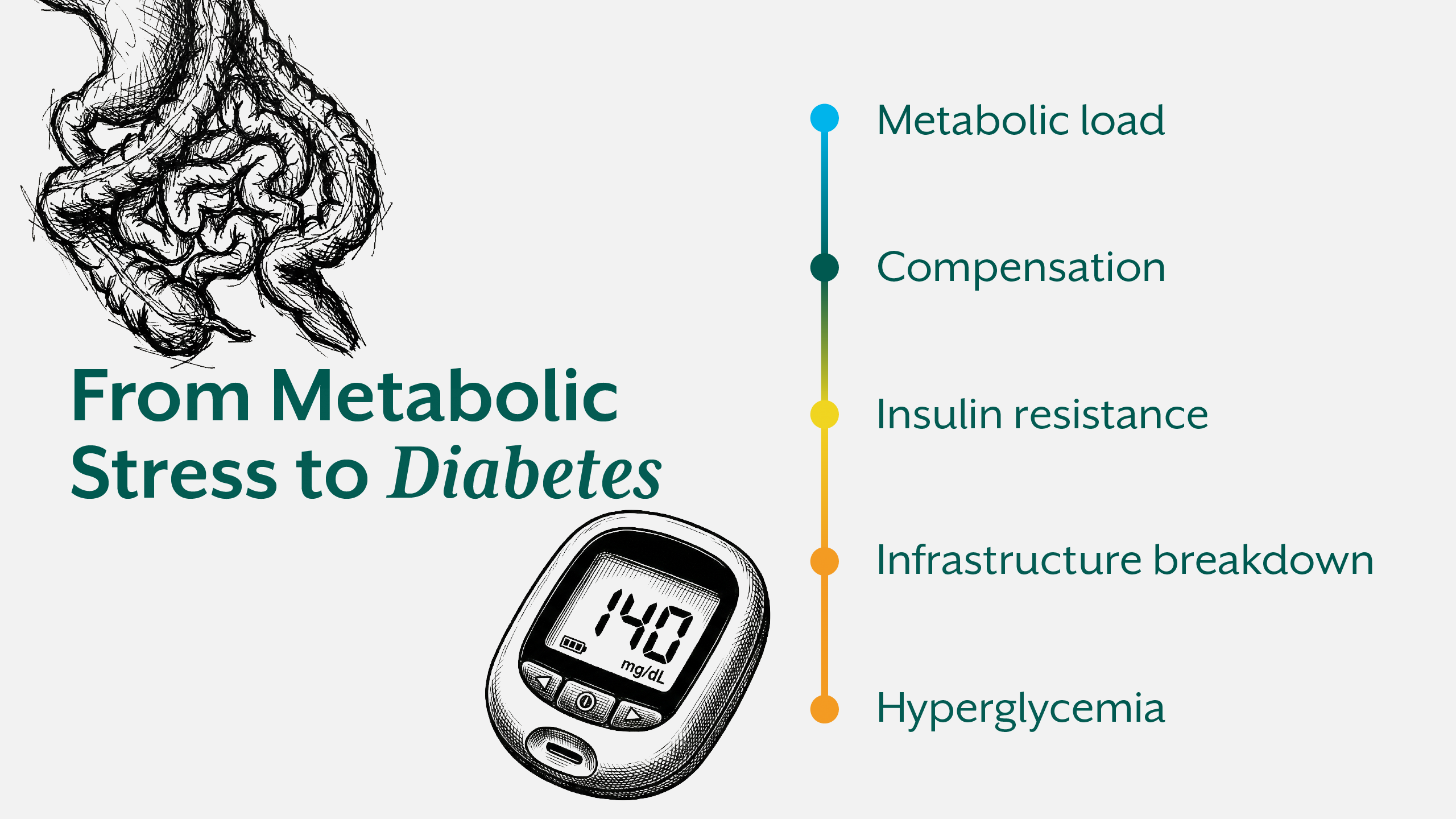
Diabetes emerges not from a single dietary mistake or genetic flaw, but from prolonged stress on the body’s energy-handling systems. Chronic insulin resistance, inflammatory load, impaired fat storage, and hormonal miscommunication collectively push the system toward failure.
Why This Model Changes Prevention
Once learners adopt this framework, diabetes prevention stops being reactive. The focus shifts from controlling numbers to restoring systems.
This is why education models at iThrive Academy including iThrive Certified Functional Nutrition (ICFN) emphasize insulin sensitivity, metabolic flexibility, and early dysfunction markers rather than waiting for diagnostic thresholds.
Learning to See Diabetes Differently
Perhaps the most valuable outcome of the Metabolic Infrastructure Model is not better protocols but better perception.
Learners begin to notice patterns earlier, question “normal” results more thoughtfully, and understand diabetes as a long physiological story rather than a sudden diagnosis.
Key Takeaway
The Metabolic Infrastructure Model reframes diabetes as the end-stage expression of prolonged metabolic strain rather than a sudden failure of blood sugar control. By understanding how insulin resistance, energy inefficiency, inflammation, and compensation interact over time, learners gain a more accurate, humane, and actionable understanding of diabetes. This perspective allows earlier intervention, deeper prevention, and education that reflects how the body truly functions, not just how it is measured.








.jpg)