Introduction
Most of you practitioners might have come across this patient.
She’s seen a psychiatrist, a gynaecologist, and even a neurologist. Her blood work is “normal”. Her MRI is pretty clear. She’s sleeping badly, crying too easily, forgetting simpler words, snapping at the people she loves, and waking every morning with a very low, steady sense that something’s off. Someone has prescribed her an antidepressant, sometimes it helps and often it doesn’t.
What rarely enters the entire conversation is the mere possibility that the problem is not not psychological, it’s biological and more specifically it’s metabolic.
This is the entire central idea behind nutritional psychiatry.
What Is Nutritional Psychiatry?
Nutritional psychiatry is the study of how food, gut health, metabolism, nutrient status, and inflammation influence mental health. It starts from a very simple yet uncomfortable truth that the brain isn’t floating separately from the rest of the body.
The brain utilized around 20% energy of the body. It is metabolically quite expensive tissue. When the body is inflamed, or the blood sugar is unstable, or the gut is damaged, or the nutrients needed to build neurotransmitters are missing, the brain is often the very first place where the consequences show up.
This is exactly why the earliest signs of nutritional problems are not always like digestive symptoms or fatigue. At times, they also look like:
- Anxiety that appears suddenly out of nowhere
- Poor concentration and brain fog
- A very strong sense of being “not yourself”
- Depressions that keeps worsening before periods or after stress
- Emotional reactivity, irritability, or overthinking
For years and years, nutritional psychiatry in India has been treated as alternative or secondary. Yet if you work with women with burnout, PCOS, unexplained fatigue, thyroid disorders, chronic stress, and autoimmune disorders, you are already seeing psychiatric nutrition everyday whether you call it that or not.
The Food and Mood Connection Nobody Explained in Medical School
A practitioner once told us that she had spent almost 3 years treating a patient for “treatment-resistant anxiety”. The woman had poor sleep, severe PMS, panic attacks, bloating, and couldn’t tolerate crowded spaces anymore.
What completely changed her case wasn't different medications.
It was in fact discovering that she had severe magnesium deficiency, very low intake of omega-3, chronically unstable blood sugar, and gut inflammation after years of antibiotics.
Within a span of 4 months, her anxiety had reduced drastically. This is the food and mood connection in practice. The brain is dependent on a constant supply of amino acids, minerals, fats, oxygen, and vitamins. Neurotransmitters aren't produced out of thin air. Serotonin does require magnesium, tryptophan, iron, and vitamin B6. Dopamine requires zinc, folate, tyrosine, and B12. GABA, the neurotransmitter most linked with calmness, is heavily dependent on healthy gut function and magnesium.
When these raw materials are missing, the brain doesn’t simply “try harder”. It compensates, mood drops, focus disappears, and the stress response becomes quite louder.
Why Modern Diets Are So Problematic for Mental Health
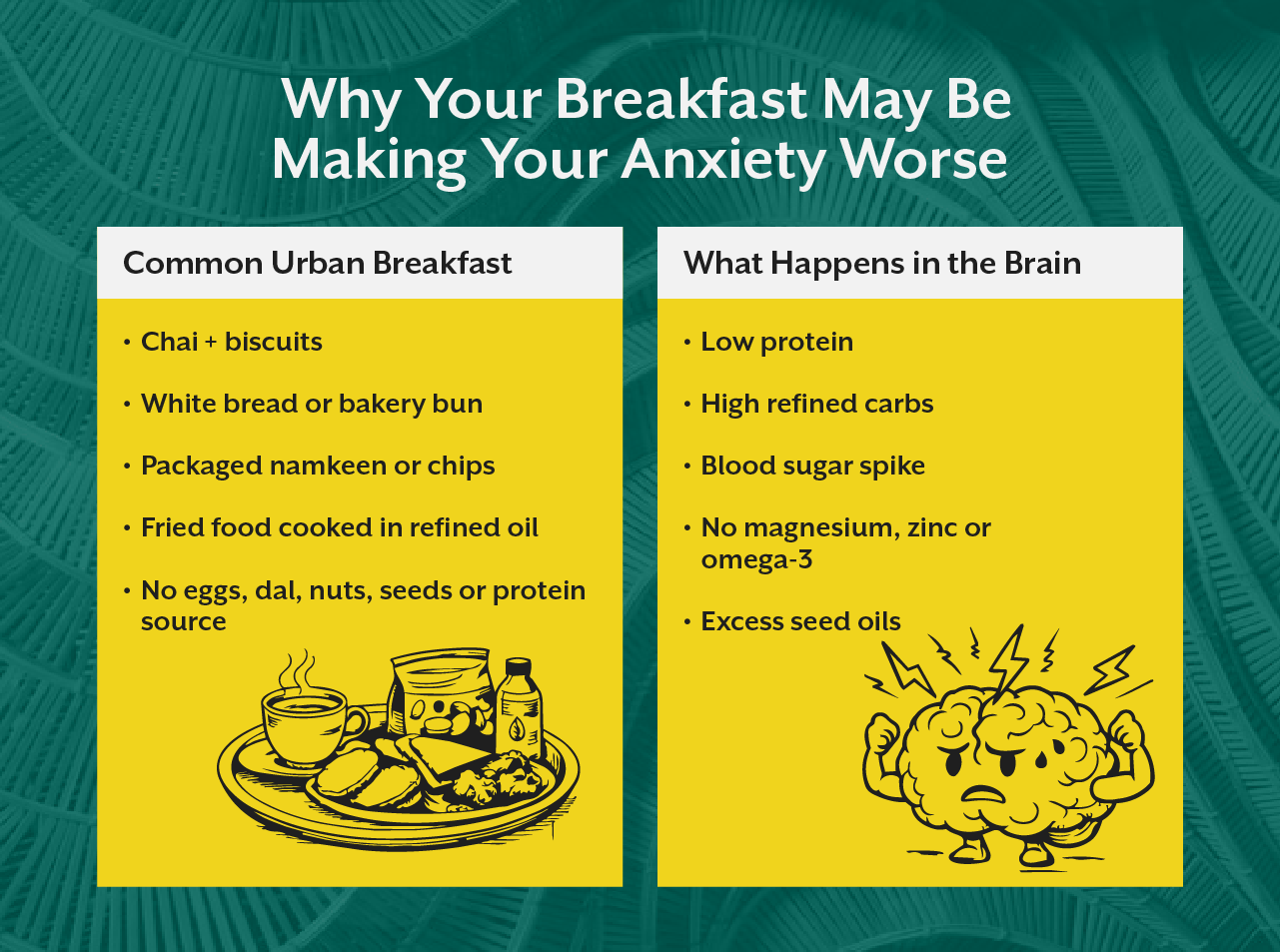
The typical urban Indian diet often develops the perfect storm for poor mental health:
- Low protein at breakfast
- No zinc, magnesium, or omega-3 intake
- Frequent blood sugar spikes from bakery foods, chai, packaged snacks, and chai
- Excess inflammatory seed oils as well as restaurant food
- High refined carbohydrate intake
Many people are living on enough calories but not enough nutrients.
Many people are living on sufficient calories but not sufficient nutrients. And the brain notices it.
The Gut-Brain-Immune Axis: Where Anxiety Often Begins
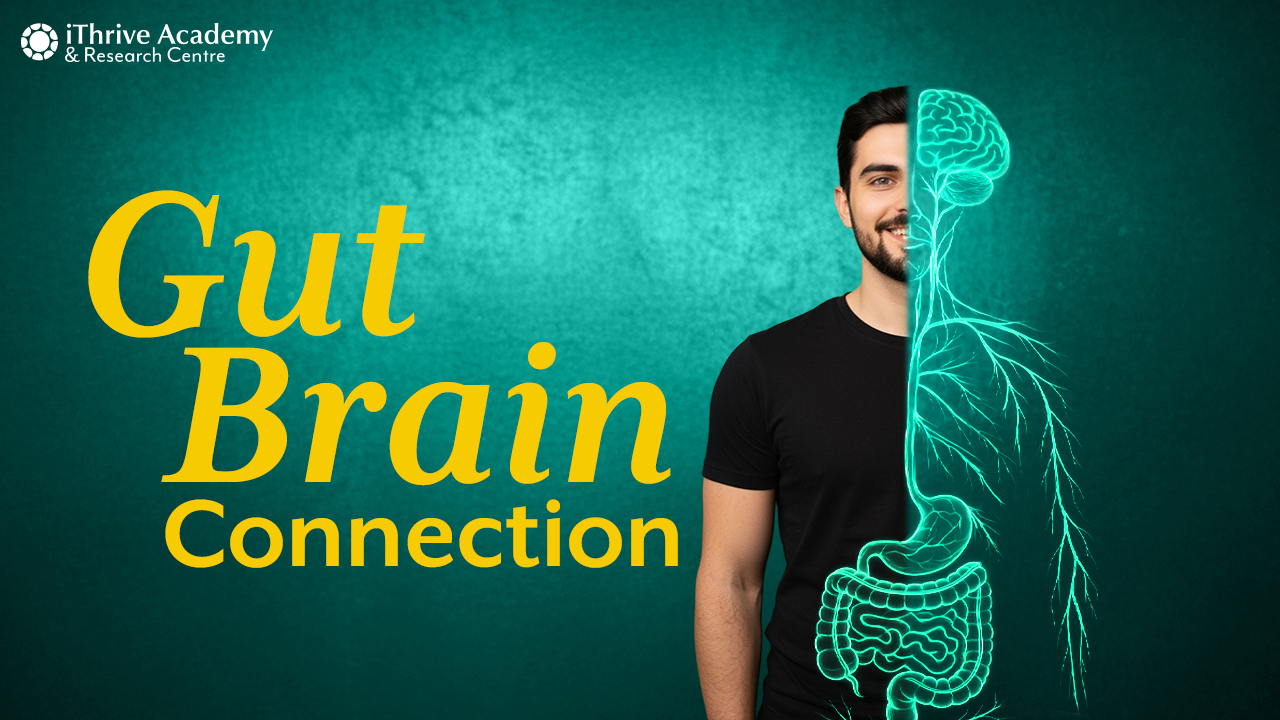
The most important concept in nutritional psychiatry is the gut-brain axis.
The gut and the brain communicate constantly through the vagus nerve, the immune system, hormones, and the microbiome. Your patient's anxiety might not begin in the mind at all. It might begin in the intestine.
Gut Bacteria Are Making Neurotransmitters All Day
Trillions of gut microbes produce compounds that have a direct effect on the mood. Certain strains help produce dopamine, serotonin, and GABA. That means a person consuming a diet low in fibre, high in sugar, and repeatedly exposed to antibiotics might slowly lose the microbial diversity that is required for emotional stability.
This is why so many clients with anxiety often describe:
- Constipation
- IBS-like symptoms
- Bloating
- Feeling worse after some meals
- Food intolerances
The body keeps giving you clues. Maybe you are not just trained to connect them.
Leaky Gut and the Inflammation-Anxiety Loop
When the intestinal lining becomes quite damaged, bacterial toxins like lipopolysaccharides can leak into the bloodstream. This particular process is called metabolic endotoxemia, which further activates the immune system. The result is not just digestive discomfort.
The immune system eventually releases inflammatory chemicals like IL-6 along with TNF-alpha. These can cross into the brain and activate microglia, the brain’s immune cells. This further leads to inflamed brain.
An inflamed brain does not feel calm.
It feels like:
- Low mood
- Exhaustion that sleep can never fix
- Racing thoughts
- Feeling emotionally fragile for no apparent reason
- Sensory overwhelm
The Kynurenine Pathway: Why Inflammation Can Feel Like Depression
Here is one of the most overlooked mechanisms in psychiatric nutrition. Under normal circumstances, the amino acid tryptophan is utilized to make serotonin. But during the chronic inflammation period, the body diverts tryptophan away from serotonin and into something called the kynurenine pathway. So here instead of making more serotonin, the body starts producing quinolinic acid, which is a neurotoxic compound linked with depression, suicidal thinking, fatigue, and poor concentration. This is one of the reasons why telling someone to “just think positively” can feel almost insulting because their brain might not literally have the chemistry required to feel better.
Why Brain Fog Is Often a Mitochondrial Problem

Many people describe anxiety and depression as emotional conditions. But ask patients what they are suffering from most, and they often say something else:
Many people describe depression and anxiety as emotional conditions. But whenever we teach our students to ask their patients what they are suffering from most, they often say something else. “I just don’t feel clear anymore.” That loss of clarity matters the most.
Mental clarity is entirely dependent on mitochondria, the tiny energy factories inside brain cells. When mitochondria cannot produce enough ATP, the brain eventually slows down. The person might still be functioning, they may still go to work and take care of everyone else, but they cannot think the way they used to.
Magnesium: The Missing Link in Nutrition and Anxiety
Magnesium is required for ATP to become active. Without magnesium, the brain keeps struggling to make and use energy. Magnesium also regulates GABA receptors, which further helps the nervous system to slow down.
That is exactly why low magnesium often shows up as:
- Muscle tightness
- Feeling “wired but tired”
- Anxiety
- Palpitations
- Poor sleep
In practice, magnesium deficiency is one of the most ignored and the most common nutritional problems in India.
Thiamine Deficiency and the High-Stress Brain
Thiamine, or Vitamin B1, is crucial for mitochondrial energy production. A person living on a high-sugar diet, skipping meals, surviving on coffee, or drinking alcohol regularly can become functionally thiamine deficient even when the standard lab tests will look acceptable.
The symptoms are somewhat surprisingly psychiatric:
- Brain fog
- A strange inability to cope up with ordinary life
- Panic
- Memory problems
- Irritability
Many of you might miss this because you are constantly looking for a psychiatric diagnosis instead of a metabolic explanation.
What to Eat for Mental Health: The Nutritional Psychiatry Plate

There is no single anti-anxiety food or anti-depressant diet, but there are patterns. The people who feel mentally better over time mostly stop eating in a way that destabilises the brain.
Build Meals Around Protein and Blood Sugar Stability
Every meal should necessarily contain adequate protein. Protein provides the amino acids required to make neurotransmitters. It also prevents the blood sugar crashes that might trigger adrenaline and cortisol. A breakfast of chai and toast is often an ultimate recipe for mid-morning anxiety. On the contrary, a breakfast of eggs, chills, or greek yogurt develops a very different brain chemistry by 11 a.m.
Prioritise Omega-3 and Anti-Inflammatory Foods
Omega-3 fats, specifically EPA and DHA, are beneficial in reducing inflammation and improving communication between brain cells.
For the majority of Indian patients, omega-3 intake is extremely low.
In such cases always encourage them to have:
- Fatty fishes like salmon, sardine and mackerel
- Flaxseeds
- High quality Marine Omega-3 supplement where needed
- Walnuts
- Chia seeds
At the very same time, also reduce the foods that quietly worsens the inflammation:
- Sweetened drinks
- Excess seed oils
- Refined sugar
- Packaged snacks
- Deep-fried foods
The Quiet Role of B12, Folate and Homocysteine
Many patients with poor memory and depression have elevated homocysteine, a marker that recommends impaired methylation. B12 and folate are needed to recycle homocysteine and also support the production of neurotransmitters.
If a vegetarian patient has depression, fatigue and brain fog, always check for their B12.
The Overthinking Brain, the Default Mode Network and Why Breathing Helps
Some people don’t feel anxious. They feel extremely trapped inside their own thoughts. This is somewhere partly related to the default mode network, the part of the brain that is involved in overthinking and rumination. When the default mode network is overactive, the brain becomes extremely stuck in repetitive loops. Nutrition matters here too. A brain with better energy production tends to move much more easily into focused, present-moment activity.
But one of the fastest tools is not food. It is breathing.
Slow nasal breathing increases carbon dioxide tolerance. This eventually improves oxygen delivery to the brain via something called the Bohr effect. Many patients notice that when they learn to breathe more slowly and less dramatically, their anxiety reduces for the very first time in years.
Why This Matters for Practitioners
If you are a practitioner, this is truly the part that matters most. The patient sitting in front of you might not need another label. They might need someone who understands that food and mental health are inseparable. They might need someone who knows how to read symptoms via the lens of the gut-brain axis, nutrient deficiencies, inflammation, and hormone changes. This is exactly why nutritional psychiatry is becoming one of the most valuable skills for modern practitioners.
At iThrive Academy, these mechanisms are explored in far greater depth inside the iThrive Certified Functional Nutrition (iCFN) programme.
You get a chance to learn how to interpret patterns like high homocysteine, cortisol, gut-driven anxiety, blood sugar instability, dysregulation and the nutrient deficiencies hidden behind depression as well as brain fog.
Key Takeaway
Nutritional psychiatry is not about replacing therapy or medication with a green smoothie. It is about recognising that anxiety, depression and mental clarity are deeply shaped by biology. When the gut is inflamed, blood sugar is unstable, mitochondria are underpowered and the nutrients required to build neurotransmitters are missing, the brain struggles. The encouraging part is that these are not abstract problems. They are measurable, understandable and often changeable. For practitioners, this is an opportunity to move beyond symptom management and finally ask a better question: what is happening underneath the mood?







.jpg)