.webp)
Introduction
A woman walks into your clinic saying she feels emotionally very unstable for nearly 10 days every month. She mentions symptoms that she is unable to sleep properly before her period, her thoughts racing at night, even the smallest of the inconveniences suddenly feel very overwhelming, heart beats getting faster, and mood being irritable and reactive. Then after all of this, her period finally arrives and within the next 2-3 days, she starts feeling normal again.
Most women describing this pattern are still being told the very same thing that it’s just PMS and it’s okay.
But this particular sentence has quietly decreased one of the most important neuroendocrine conversations in women’s health.
So if you are a practitioner, health coach, or even a learner trying to understand depression and anxiety through a root cause lens, this is a clinical pattern that is worth studying deeply. Because premenstrual anxiety is not random emotionality, it is physiology. And once you understand the hormonal, neurological, as well as the inflammatory mechanisms underneath it, the entire picture changes.
This is exactly where Nutritional Psychiatry and functional medicine begin to overlap in fascinating ways. So before we go deeper, let us define anxiety properly. Anxiety is not simply related to “worry.” It is rather a state of heightened nervous system activation which is characterised by factors such as excessive anticipation, hypervigilance, racing thoughts, restlessness, physical tension, altered breathing patterns, as well as changes in neurotransmitter signalling. Many anxiety synonyms such as nervousness, panic, overwhelm, uneasiness, and fearfulness describe emotional experiences, but biologically, anxiety is a nervous system state.
And in many women, that state becomes significantly amplified before the menstrual period.
Understanding the Hormonal Shift Before a Period
The Luteal Phase Is Not Just a Reproductive Event
The second half of the menstrual cycle, also known as the luteal phase, begins right after ovulation and ends when the period starts. This is the exact window where most women report worsening anxiety, low mood, irritability, as well as emotional sensitivity.
What many practitioners miss is that the luteal phase is not just about reproductive hormones. It is also a neurological event. During this phase, progesterone initially rises and then sharply falls if pregnancy does not occur and estrogen also fluctuates. These hormonal shifts directly influence neurotransmitters such as serotonin, dopamine, and GABA. This means the brain itself becomes more vulnerable during this time.
For some women, the change is subtle. For others, it feels like their nervous system becomes unrecognisable for 10 days every month.

Why Progesterone Matters for Anxiety
Progesterone is often introduced as a reproductive hormone, but clinically, it behaves more like a nervous system stabiliser. One of progesterone’s metabolites, which is allopregnanolone, interacts directly with GABA receptors in the brain. GABA is the primary inhibitory neurotransmitter that is responsible for calmness, emotional regulation, and relaxation. When progesterone levels decline before a period, the calming GABAergic effect also drops drastically.
This is why many women suddenly experience racing thoughts, disruption in sleep, increased sensitivity to stress, panic sensations, emotional reactivity and also the physical symptoms of anxiety.
The most important thing to understand here is that this is not imagined anxiety, it is neurochemistry. A practitioner who understands this will approach the patient very differently from someone who sees the issue just as merely emotional instability.
The Cortisol Connection Nobody Explains Properly
Chronic Stress Changes the Menstrual Experience
Here is where the conversation becomes more clinically interesting. Women under chronic stress mostly witness significantly worse premenstrual anxiety symptoms. That is because cortisol and progesterone are deeply interconnected to each other.
Both hormones share the same precursor namely pregnenolone.
Under prolonged stress, the body prioritises production of cortisol for survival. This process is commonly referred to as the pregnenolone steal. As cortisol demand rises, the availability of progesterone declines further. Now just imagine what happens during the luteal phase when progesterone is already naturally dropping.
The woman enters the week before her period with higher cortisol, unstable blood sugar, lower GABA support, poor sleep, and increased inflammation. The nervous system becomes biologically less resilient.
This is one reason why women with burnout, sleep deprivation, insulin resistance, or chronic inflammation often experience more severe PMS anxiety patterns.
Depression and Anxiety Are Not Separate Conversations
Many women reporting cyclical anxiety also report symptoms of low mood, fatigue, hopelessness, emotional numbness, or crying spells before their period. This is where depression and anxiety intersect hormonally.
Inflammation, cortisol dysregulation, mitochondrial dysfunction, and neurotransmitter depletion influence both conditions simultaneously. In functional medicine, depression is not viewed purely psychologically, it is often examined metabolically and neurologically.
The brain is an energy intensive organ. When factors involving nutrient deficiencies, inflammation, poor sleep, as well as hormonal dysregulation accumulate together, emotional symptoms emerge downstream.
This systems based framework is explored deeply inside the Women’s Hormonal Health course at iThrive Academy, wherein the practitioners learn how ovarian hormones, the HPA axis, gut health, and neurotransmitters continuously influence one another across the menstrual cycle.
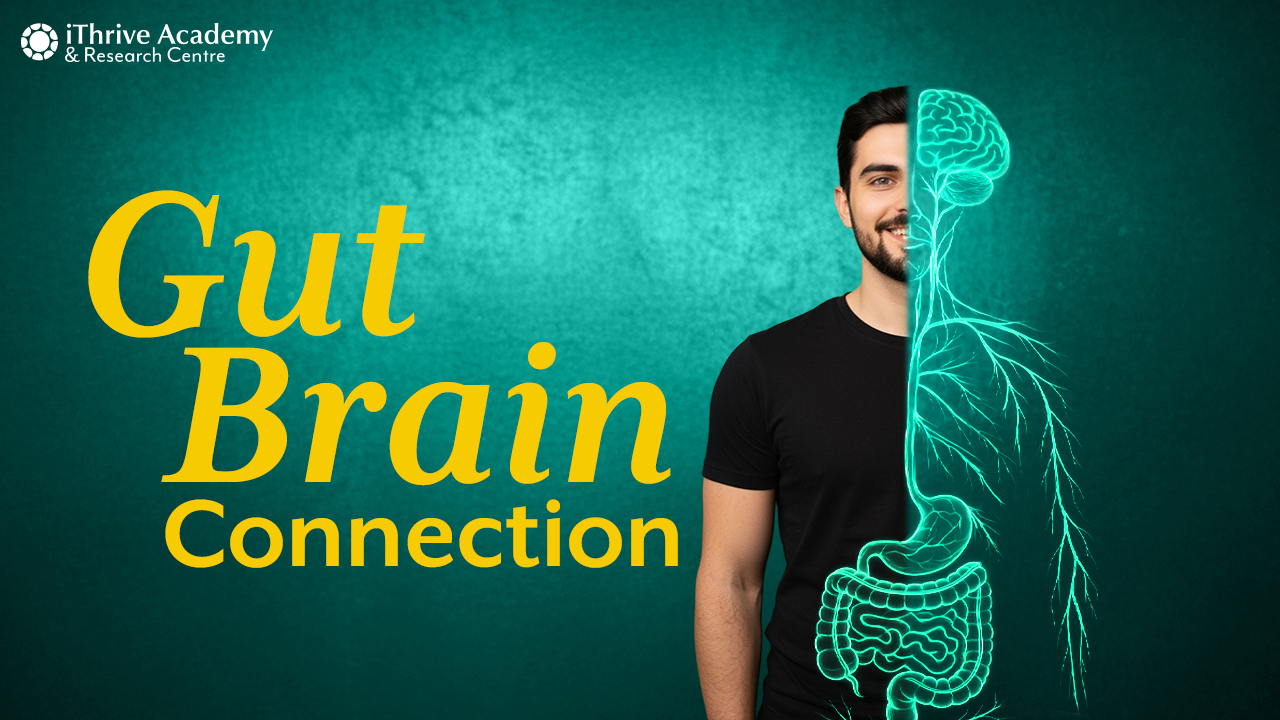
The Gut Brain Hormone Axis
Why Gut Health Influences Premenstrual Anxiety
One of the most overlooked contributors to anxiety before a period is gut health.
The gut microbiome influences the production of serotonin, inflammation, immune regulation, estrogen metabolism, and absorption of nutrients.
When dysbiosis or intestinal permeability develops, inflammatory compounds such as lipopolysaccharides can activate immune pathways that directly affect the brain. This then creates neuroinflammation.
Now after two factors that are neuroinflammation with declining progesterone and unstable blood sugar during the luteal phase are combined together, you have the perfect environment for worsening anxiety symptoms.
Many practitioners still separate gastroenterology, endocrinology, and psychiatry into different silos. Functional nutrition always ends up on a much more intelligent question: What if the systems are speaking to each other continuously?
The Estrobolome and Mood
The estrobolome refers to the collection of gut bacteria involved in estrogen metabolism. So when the gut dysbiosis alters estrogen clearance, women may experience exaggerated estrogen fluctuations. This directly impacts serotonin and dopamine signalling, both of which strongly influences the regulation of mood.
This is one of the reasons why some women feel emotionally volatile before their period even when standard hormone panels appear “normal.” The issue is often not just hormone quantity. It is hormone metabolism, nervous system sensitivity, inflammation, and resilience capacity.
Blood Sugar Instability and Premenstrual Anxiety
The Hidden Driver Most Women Never Notice
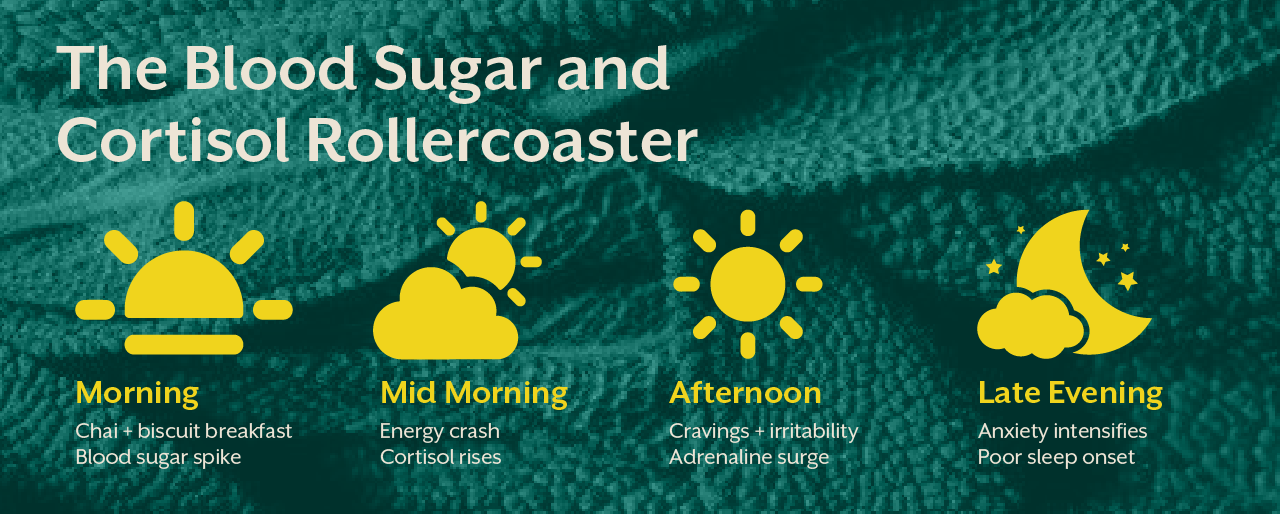
Ask women around you what they crave before their period and the answer is often the same like bakery foods, sugary biscuits, bakery foods, chips, and caffeine.
Now physiologically, this matters a lot. Frequent blood sugar spikes increase adrenaline and cortisol output. The rapid crash afterward creates shakiness, irritability, fatigue, and heightened anxiety symptoms. A woman already entering the luteal phase with lower stress resilience now experiences repeated glucose crashes throughout the day.
Clinically, this can look like emotional overwhelm, low concentration, emotional eating, panic, irritability or even fatigue.
This is why nutritional psychiatry India is becoming such an important emerging field. Food and mental health are not separate discussions anymore.
The practitioner who understands blood sugar regulation often sees dramatic improvements in emotional symptoms that previously appeared purely psychiatric.
Nutritional Deficiencies That Affect Mood Before a Period
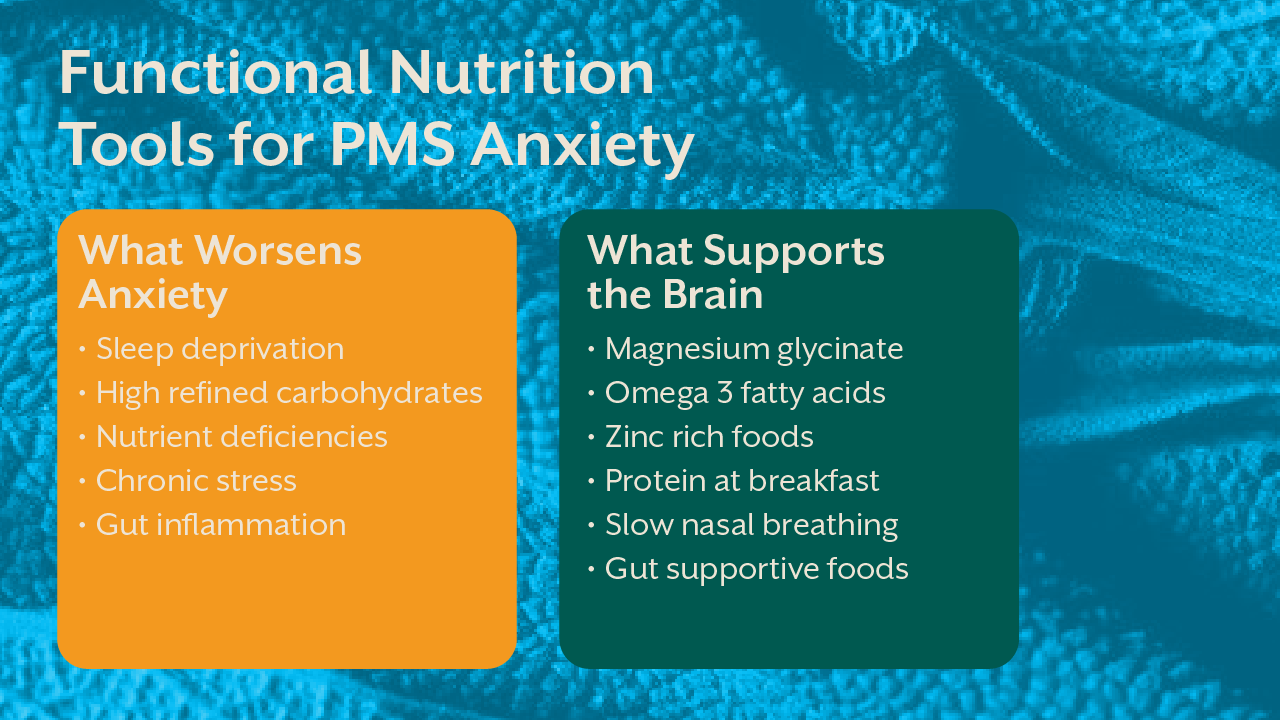
Magnesium and Nervous System Regulation
Magnesium is one of the most clinically relevant nutrients in women with anxiety. It regulates the quality of sleep, stress resilience, production of ATP, GABA activity, and lastly relaxation of muscles.
Yet deficiency is incredibly common, especially in women under chronic stress.
Many women with premenstrual anxiety also experience muscle tightness, headaches, palpitations, as well as headaches, All of these may point toward magnesium insufficiency.
B Vitamins and Neurotransmitter Production
Vitamin B6, folate, and B12 are deeply involved in neurotransmitter synthesis and the methylation pathways. When these pathways become compromised, serotonin and dopamine production can suffer. High homocysteine levels, often associated with poor methylation, are increasingly linked to depression and anxiety patterns.
This is why functional nutrition for mental health goes far beyond simply recommending supplements. It requires understanding biochemistry. In the iThrive Certified Functional Nutrition (iCFN) programme, practitioners are trained to connect mood symptoms with inflammation, nutrient status, hormones, mitochondrial function, and gut health rather than viewing them as isolated psychiatric events.
Why This Matters for Practitioners
Women Do Not Need To Be Dismissed
One of the most frustrating experiences that women describe is being told their symptoms are “normal” while feeling emotionally overwhelmed every month.
Yes, hormonal fluctuation is normal but severe suffering is not.
As practitioners, the goal is not to pathologise every emotional experience. The goal is to recognise when physiology is creating unnecessary distress and then understand why.
Sometimes the missing piece is:
- cortisol dysregulation
- insulin resistance
- chronic inflammation
- poor sleep
- nutrient depletion
- gut dysfunction
- unresolved stress physiology
And often, it is several of these happening simultaneously at the very same time.
The future of mental health conversations will increasingly involve nutritional psychiatry, metabolic health, nervous system regulation, and hormone science together. As the brain does not exist separately from the body.
Key Takeaway
If anxiety consistently worsens before a woman’s period, the conversation must move beyond simply calling it PMS. The premenstrual phase is a neurologically sensitive window wherein the progesterone decline, cortisol dysregulation, inflammation, gut dysfunction, blood sugar instability, and nutrient deficiencies can all converge to amplify emotional symptoms. Understanding this changes how practitioners approach depression and anxiety entirely is quite important. So instead of seeing mood symptoms as isolated psychological events, functional nutrition encourages us to view them as deeply connected to metabolism, hormones, neurochemistry, and physiology. That shift in perspective is exactly what allows the practitioners to move from symptom management toward truly understanding the female brain and body together.






.jpg)