Introduction
If you have ever worked with a patient who says,
“I’m eating less. I’m exercising. But I keep gaining weight.”
And their labs look “acceptable.”
And their calories look “controlled.”
You are not looking at a calorie problem.
You are looking at a nervous system problem.
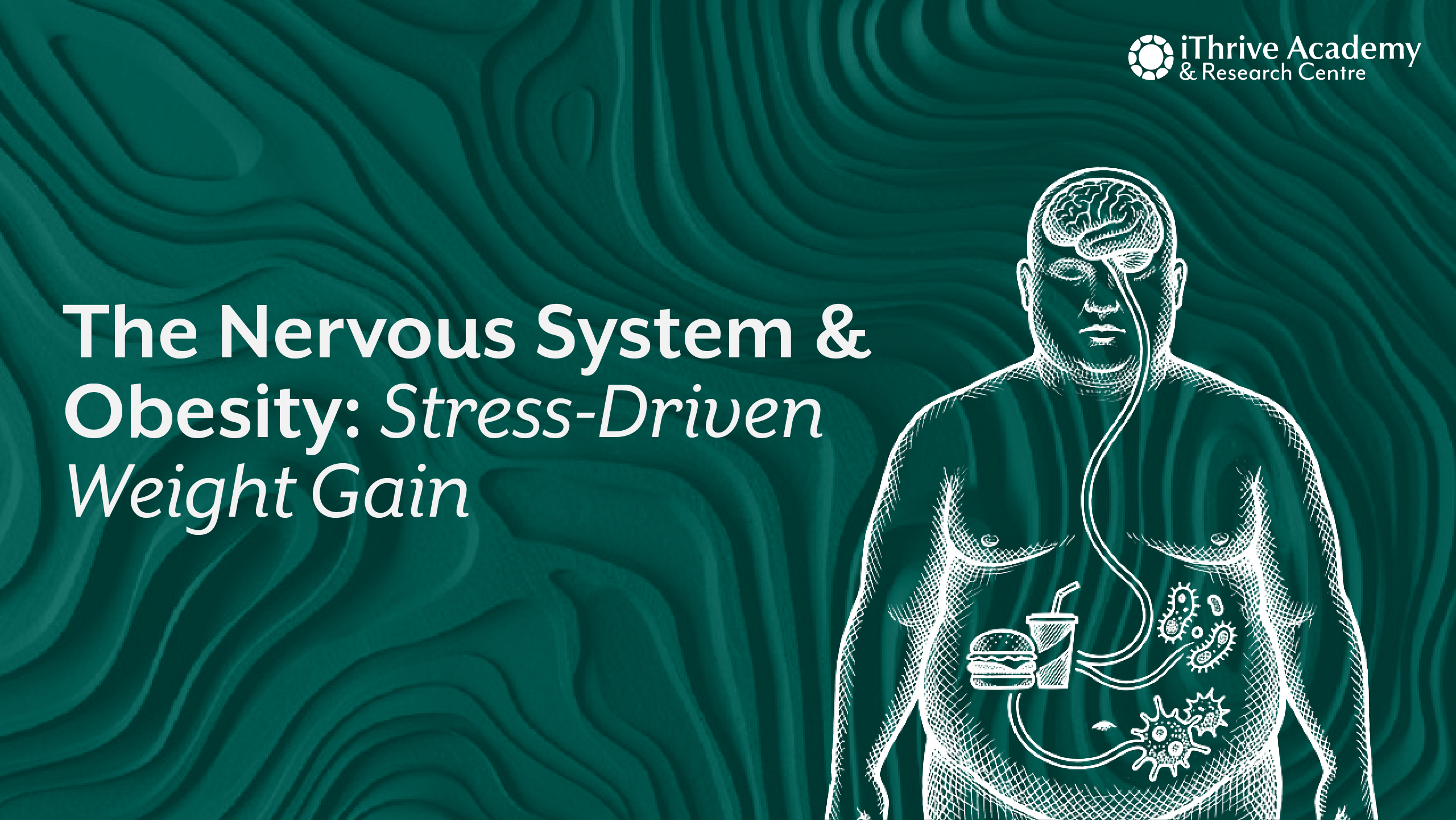
Obesity education rarely teaches you how stress and obesity are biologically inseparable. Yet chronic stress and belly fat are deeply linked through neuroendocrine signaling. When the nervous system shifts into chronic survival mode, metabolism reorganizes around protection, not performance.
If you are teaching obesity clinically, or learning advanced functional nutrition, you must understand this:
Metabolism obeys the nervous system.
The Autonomic Nervous System: The Hidden Regulator of Metabolism
The autonomic nervous system (ANS) governs heart rate, digestion, glucose mobilization, fat storage, and inflammatory tone. It has two primary arms:
- Sympathetic (fight or flight)
- Parasympathetic (rest, digest, repair)
In acute stress, sympathetic activation increases glucose availability, elevates cortisol, and suppresses digestion. This is adaptive. The problem begins when stress becomes chronic.
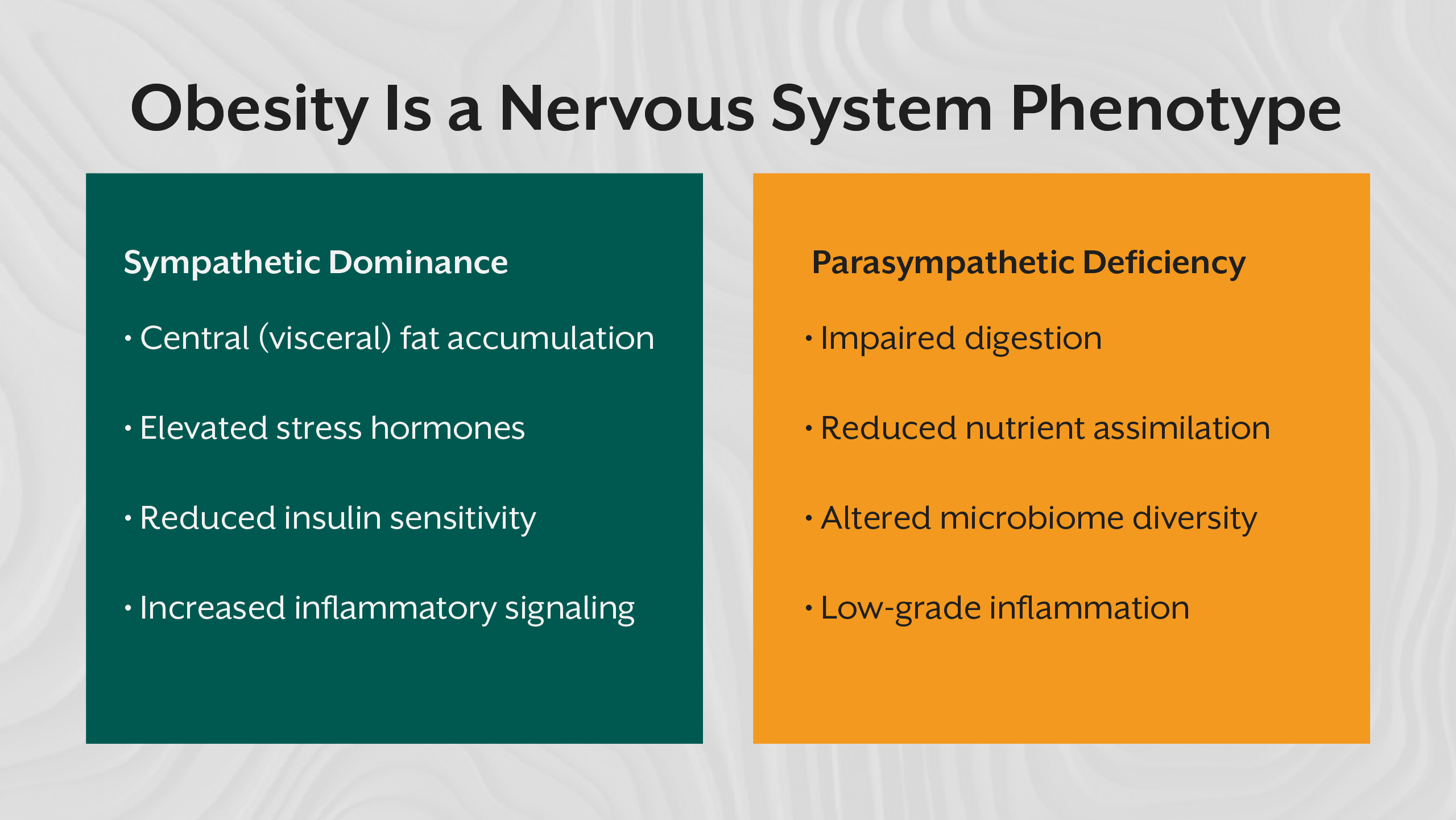
Persistent sympathetic dominance alters:
- Insulin signaling
- Appetite hormones
- Fat distribution
- Energy expenditure
- Thyroid conversion
In chronic stress physiology, fat storage becomes protective. This is one of the most overlooked mechanisms in stress and weight gain.
You may teach calories. But the nervous system decides storage.
Cortisol and Weight Gain: Beyond the Simplistic Narrative
Cortisol is not the enemy. It is a survival hormone.
However, chronic cortisol elevation changes metabolic architecture.
It increases:
- Hepatic glucose production
- Insulin secretion
- Visceral fat deposition
- Protein breakdown
- Appetite signaling
This explains why chronic stress and belly fat cluster together clinically.
Visceral adipose tissue expresses more glucocorticoid receptors. This makes abdominal fat more responsive to stress hormones and metabolism. Over time, cortisol and weight gain become biologically linked.
This is not about willpower. It is rather about stress hormones and metabolism interacting over months or years.

How Stress Causes Weight Gain Without Overeating
This is where clinical education often fails.
Weight gain from stress does not always require excess calories.
Chronic stress causes:
- Reduced mitochondrial efficiency
- Lower spontaneous movement (NEAT reduction)
- Thyroid conversion shifts (T4 → reverse T3)
- Sleep disruption altering ghrelin and leptin
- Insulin resistance
When the nervous system perceives threat, it lowers metabolic flexibility.
In fact, many patients experiencing stress and obesity report eating similar amounts as before weight gain.
If you only assess intake, you miss adaptation.
The Brain - Adipose Axis: Obesity as a Neuroendocrine Response
Adipose tissue is not passive storage. It is an endocrine organ responding to nervous system cues.
Chronic stress alters:
- Leptin signaling
- Dopamine pathways
- Reward circuitry
- Hypothalamic appetite regulation
The brain may recalibrate hunger upward under chronic stress.
This explains why stress and weight gain are often accompanied by:
- Cravings for quick carbohydrates
- Late-night hunger
- Emotional eating patterns
These are not character flaws. They are neurochemical shifts.
If you are teaching obesity clinically, this is essential to understand.
Nervous System Tone and Fat Distribution
The nervous system also affects fat distribution patterns.
Sympathetic overactivation increases central fat storage.
Parasympathetic deficiency impairs digestion and nutrient assimilation.
Chronic stress also shifts blood flow away from the gut, altering microbiome diversity. This contributes to low-grade inflammation, further worsening insulin resistance.
Stress and obesity therefore represent a systems biology obesity model.
You are not treating fat. You are treating signaling.
Why Nervous System Regulation Must Precede Weight Loss
Many obesity protocols emphasize calorie deficit before nervous system stability.
This can backfire.
Calorie restriction under chronic stress amplifies:
- Cortisol
- Adaptive thermogenesis
- Hunger hormones
- Fatigue
The nervous system and weight loss are interconnected. If the system perceives threat, weight loss becomes biologically resisted.
Clinical obesity management must ask:
Is this patient safe at a nervous system level?
This is where advanced training becomes critical.
The iThrive Academy blog “From Glucose-Centric Care to Insulin-Centric Thinking: A Necessary Shift in Diabetes” highlights how upstream metabolic thinking changes outcomes.
Similarly, “Insulin Resistance as a Pre-Diagnostic State: Why Type 2 Diabetes Is a Late Label” explores compensation phases that overlap significantly with stress physiology.
Neuroplasticity and Metabolic Recovery
The hopeful part: stress physiology is reversible.
When vagal tone improves and sympathetic overdrive reduces, we observe:
- Improved insulin sensitivity
- Better sleep architecture
- Reduced visceral fat deposition
- Normalized appetite signaling
Interventions that support nervous system balance include:
- Breathwork
- Sleep regulation
- Circadian alignment
- Adequate protein intake
- Stress perception reframing
- Resistance training
In functional medicine obesity frameworks, this is foundational.
If you are teaching obesity clinically, you must include nervous system education.
What This Means for Clinical Education
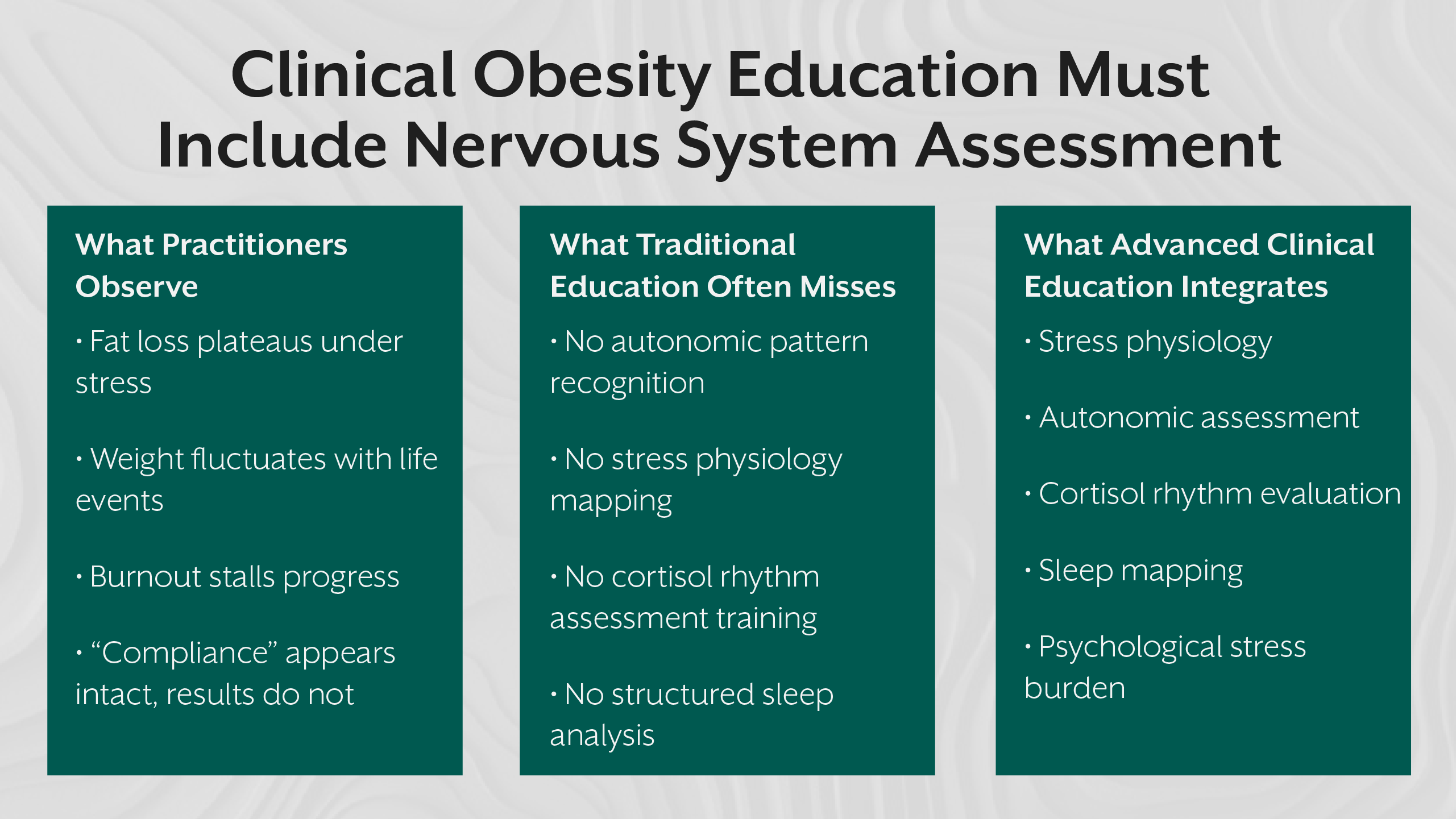
If you are a practitioner, you may have noticed:
Patients plateau under stress.
Weight fluctuates with life events.
Fat loss stalls during burnout.
Traditional obesity education does not teach nervous system pattern recognition.
Advanced clinical obesity education must integrate:
- Stress physiology
- Autonomic assessment
- Cortisol rhythm evaluation
- Sleep mapping
- Psychological stress burden
This is deeply integrated into iThrive Certified Functional Nutrition (ICFN), where obesity is approached through systems biology, not caloric arithmetic.
Because obesity science explained without neurobiology is incomplete.
Key Takeaway
Obesity is not merely a metabolic condition. It is a neuro-metabolic adaptation. Chronic stress reshapes hormonal signaling, alters fat distribution, disrupts appetite regulation, impairs insulin sensitivity, and recalibrates energy expenditure. The nervous system governs survival priorities, and when it perceives threat, it reorganizes metabolism toward protection and storage. This is why stress and weight gain are biologically intertwined, why chronic stress and belly fat often coexist, and why conventional calorie-centric approaches frequently fail under high psychological burden.
Teaching obesity clinically therefore requires a shift toward stress physiology, autonomic balance, and neuroendocrine integration. When practitioners understand how stress hormones and metabolism interact, they can design interventions that restore nervous system stability before demanding weight loss. Sustainable metabolic health emerges when safety replaces survival signaling. Obesity management must therefore evolve from energy arithmetic to nervous system literacy.







.jpg)