
Introduction
If you have been practicing in health, nutrition, or functional medicine long enough, you have probably seen a pattern that textbooks rarely explain clearly.
A patient begins with mild symptoms. Maybe it is fatigue, occasional joint stiffness, poor sleep, or unexplained weight gain. Initial lab tests look “acceptable.” Standard interventions are prescribed. Sometimes symptoms improve briefly. Then something curious happens. Over time the condition progresses.
Fatigue becomes chronic fatigue. Joint pain evolves into autoimmune disorders like rheumatoid arthritis. Persistent exhaustion begins to resemble fibromyalgia. Brain fog deepens. Metabolic disorders emerge.
This progression puzzles many practitioners because it seems unpredictable. Yet when viewed through a systems biology lens, the worsening of chronic illness follows remarkably consistent biological patterns.
The problem is not that these diseases are mysterious. The problem is that many training systems teach practitioners to observe symptoms in isolation rather than physiology in motion. Understanding disease progression requires looking deeper into three fundamental processes: energy regulation, nervous system signaling, and chronic inflammatory load. These processes quietly determine whether a patient stabilizes, improves, or progressively deteriorates.
Interestingly, similar gaps in education appear in metabolic disease training as well. The iThrive Academy article Why Obesity Is Taught Wrong in Traditional Nutrition Education explains how many educational systems simplify complex biological disorders into behavioural explanations.
Chronic illness progression follows the same pattern of oversimplification. If you are a practitioner or a student of functional nutrition, understanding why disease progresses is one of the most valuable clinical skills you can develop.
Chronic Disease Is Not Static. It Is a Biological Trajectory.
Most diseases do not appear suddenly. They develop through gradual physiological shifts that may begin years before diagnosis.
For example, insulin resistance can exist long before diabetes appears. Early thyroid dysfunction may develop despite “normal” laboratory reports. Chronic inflammation may simmer quietly before manifesting as autoimmune disease.
The iThrive Academy blog HOMA-IR, C-Peptide, and Insulin Load: Building a Better Framework for Diabetes Risk Assessment highlights this concept well. The article explains that metabolic dysfunction often begins long before glucose levels become abnormal.
This same principle applies to many chronic illnesses.
Behind the scenes, several processes gradually deteriorate:
- mitochondrial energy production
- immune regulation
- nervous system balance
- gut barrier integrity
- cellular signaling pathways
When these systems lose coordination, symptoms accumulate gradually rather than appearing suddenly. A practitioner who only evaluates symptoms may interpret each stage as a separate problem. However, a systems-trained practitioner sees something different. They see disease trajectory.

The Energy Problem: Mitochondria and Disease Progression
One of the most overlooked mechanisms behind worsening chronic illness is declining cellular energy.
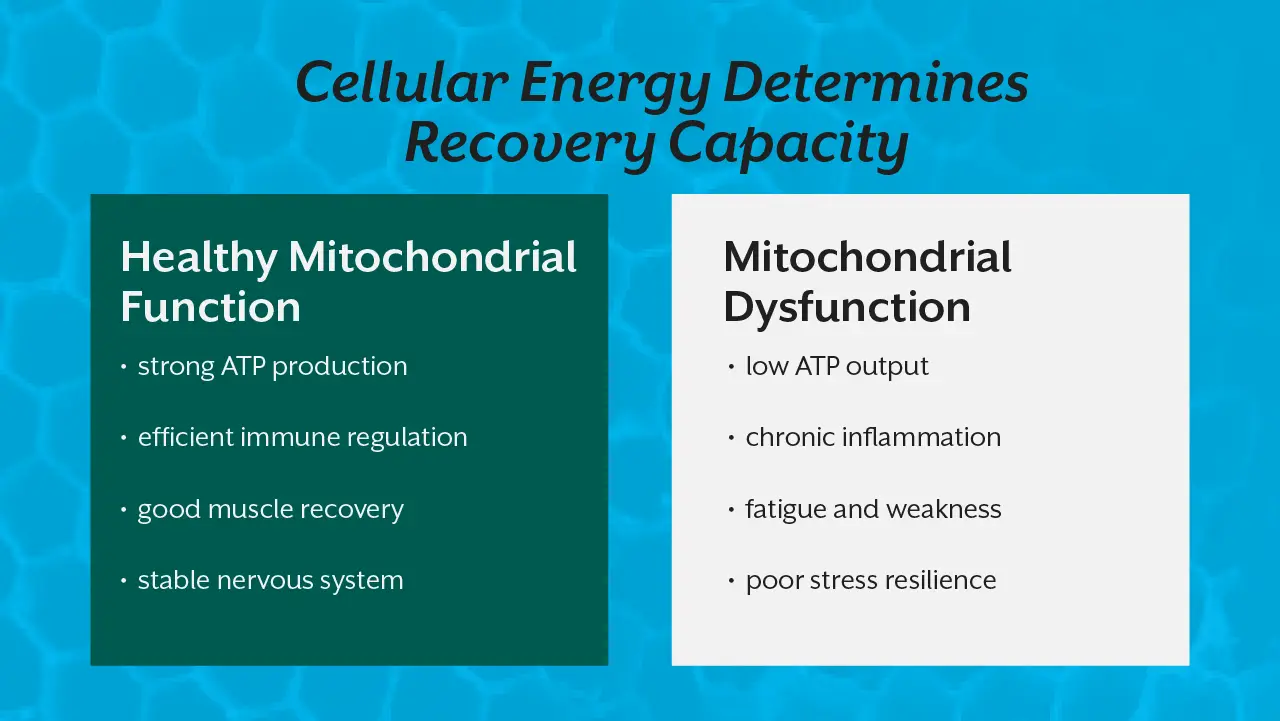
Every biological function depends on ATP production from mitochondria. When mitochondrial efficiency declines, multiple systems begin to malfunction simultaneously.
Energy deficiency affects:
- immune regulation
- nerve conduction
- muscle function
- hormonal signaling
- detoxification pathways
This is why conditions such as fibromyalgia, chronic fatigue syndrome, and multiple sclerosis frequently share symptoms like fatigue, muscle weakness, and cognitive dysfunction. These conditions may appear different clinically, yet they often share a common bioenergetic denominator.
When mitochondrial output declines, the body begins reallocating energy resources toward survival processes rather than repair. Repair slows. Inflammation persists. Recovery becomes harder.
From a practitioner’s perspective, this is the stage where patients often report a troubling experience.
They say things like:
“I feel like my body is slowing down.”
“I don’t recover the way I used to.”
“I feel exhausted even after resting.”
These statements are not vague complaints. They are physiological signals of declining energy regulation. Unfortunately, traditional clinical education rarely emphasizes cellular bioenergetics as a major driver of chronic illness progression.
Functional nutrition frameworks attempt to fill this gap by connecting metabolic pathways with clinical symptoms.
The Nervous System Factor Most Practitioners Miss
Another critical factor in chronic illness progression is the nervous system.
The autonomic nervous system regulates nearly every physiological function, including:
- immune response
- digestion
- cardiovascular function
- metabolic regulation
- inflammation
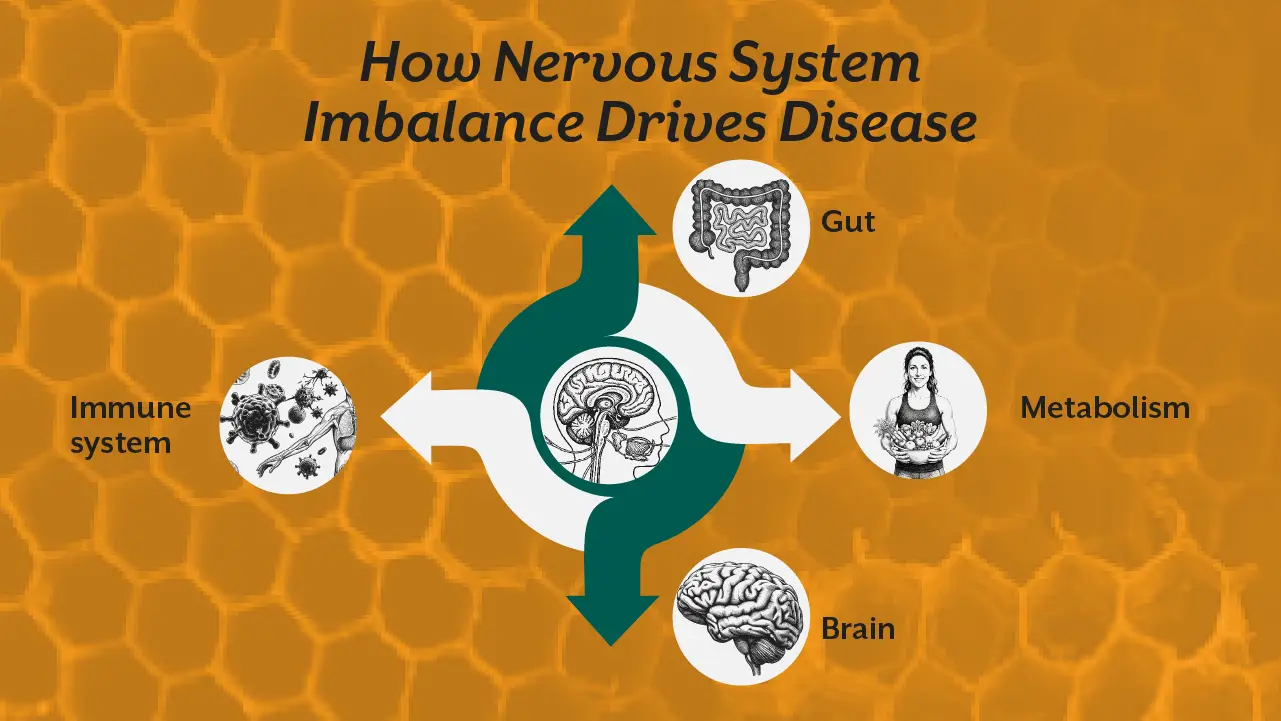
When the sympathetic nervous system remains chronically activated due to stress, illness, or environmental pressures, several physiological changes occur.
Digestive activity slows. Blood flow shifts away from the gut. Inflammatory signaling increases. Hormonal rhythms become disrupted. Over time this state becomes biologically exhausting. Patients may develop metabolic dysfunction, poor gut barrier integrity, and altered immune responses.
This is one reason stress is so strongly associated with disease flare ups in autoimmune disorders. The body is not malfunctioning randomly. It is responding to long term nervous system imbalance. In practice, this explains a common clinical observation. Many patients experience disease progression during periods of chronic stress, emotional burnout, or sleep disruption.
If the nervous system remains dysregulated, even the most sophisticated dietary intervention may struggle to produce lasting improvements.
Why Symptoms Multiply Over Time
Once energy dysfunction and nervous system dysregulation persist long enough, disease progression begins accelerating.
At this stage, patients often accumulate multiple diagnoses.
For example: A person may initially experience chronic fatigue. Later they develop autoimmune markers. Eventually metabolic disorders or neurological symptoms appear.
To a conventional diagnostic model, these appear as unrelated conditions.
However, from a functional nutrition perspective they are manifestations of the same underlying dysregulation.
- Chronic inflammation alters immune signaling.
- Mitochondrial stress reduces cellular resilience.
- Hormonal signaling becomes inefficient.
- The nervous system remains hyper vigilant.
The result is biological fragility.
Small stressors that once caused minor symptoms now trigger significant flare ups. This stage is where many practitioners feel frustrated. Their interventions appear to produce short term improvements but long term stability remains elusive. The problem is not clinical competence. The problem is incomplete physiological frameworks. When practitioners begin connecting energy metabolism, nervous system regulation, gut health, and immune signaling, disease progression becomes far more understandable.
What Advanced Clinical Education Needs to Teach
If you are learning clinical nutrition today, one important question to ask is this:
Are you being trained to treat symptoms or to interpret physiology?
Many practitioners graduate with strong knowledge of nutrients and diets but limited training in systems regulation.
For example:
• understanding mitochondrial energy metabolism
• interpreting autonomic nervous system patterns
• recognizing early metabolic dysfunction
• identifying gut barrier disruption
• linking stress physiology with immune activity
These concepts are not always emphasized in conventional training programs.
Yet they are central to understanding chronic disease progression.
Educational frameworks such as the Integrative Certification in Functional Nutrition program attempt to address this gap by training practitioners to analyze root causes rather than isolated symptoms.
Within the ICFN curriculum, students learn how metabolism, inflammation, hormones, and environmental exposures interact within complex biological networks.
This functional nutrition approach allows practitioners to identify disease patterns earlier and design interventions that address underlying mechanisms rather than surface level symptoms.
For many practitioners, this shift transforms clinical confidence. Instead of feeling puzzled by disease progression, they begin recognizing predictable physiological patterns.
Key Takeaway
Chronic illnesses rarely worsen because the body is “failing.” More often they progress because underlying biological systems remain dysregulated for long periods of time. Energy metabolism declines, the nervous system remains chronically activated, immune signaling becomes inflammatory, and repair mechanisms gradually weaken. When practitioners focus only on individual symptoms, these interconnected processes remain invisible.
However, when disease is viewed through a systems biology lens, the trajectory becomes far more understandable. By recognizing early metabolic dysfunction, nervous system imbalance, and cellular energy deficits, practitioners can intervene earlier and help patients shift from progressive decline toward recovery and resilience.